
Have you ever found yourself torn between two powerful contenders, unable to decide which one will be the ultimate winner? Well, if you’re an avid photography enthusiast searching for the perfect telephoto zoom lens, then the battle between the Sony 100-400mm and the Sigma 100-400mm demands your attention. This clash of titans promises an exhilarating comparison where these two heavyweights will spar head to head, showcasing their unique features and capabilities to determine which will reign supreme. So, grab your popcorn, folks, because it’s time for an epic showdown!
Sony 100-400 Overview
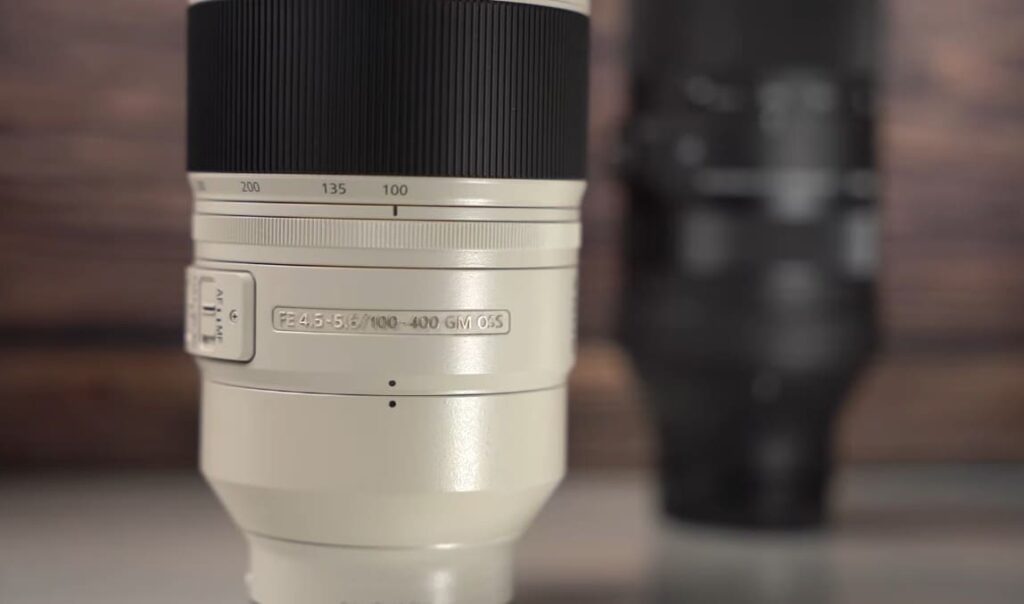
Sony’s 100-400mm F4.5-5.6 G Master Super Telephoto Zoom Lens is an impressive tool for serious photographers and videographers alike. This lens offers a versatile range of focal lengths and superb resolution, enabling you to capture stunning stills and videos with rich colors and sharp detail. With its advanced optics, the lens also provides excellent image stabilization and fast autofocus for a smooth, clear experience.
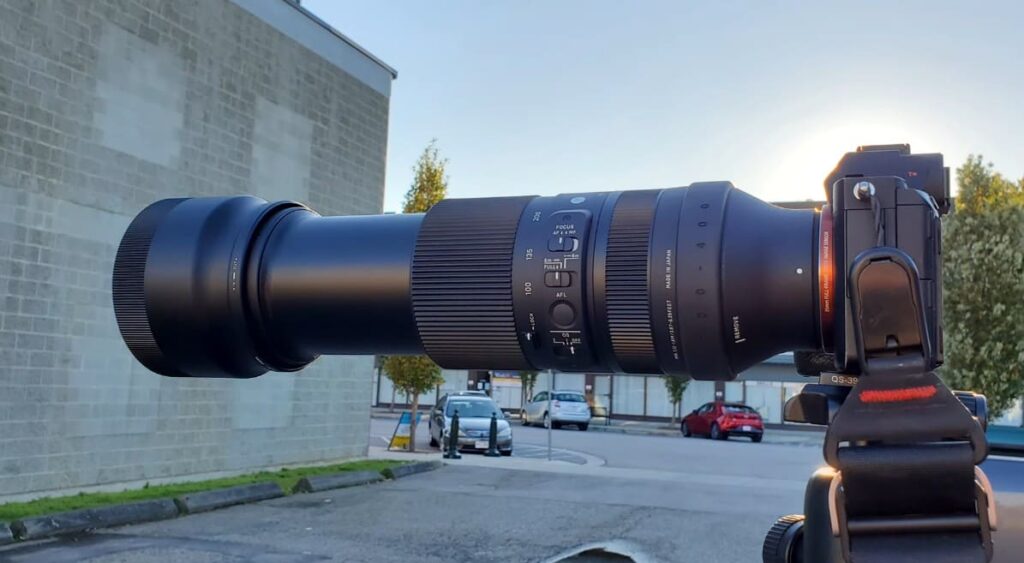
The lens boasts an array of features that make it ideal for shooting in any environment. Its dust- and water-resistant design makes it suitable for outdoor use, while its advanced optics allow you to capture sharp images even in low light. Additionally, the lens offers a maximum aperture of F4.5, allowing you to capture stunning images in any lighting conditions.
The 100-400mm lens also features a range of advanced technologies that make it easy to use. Its Optical SteadyShot image stabilization system helps reduce camera shake and blur while shooting handheld, allowing you to capture crisp images even when your hands aren’t perfectly still. Additionally, the lens’ Direct Drive Super Sonic wave Motor ensures fast and accurate autofocus, so you can capture the perfect moment without missing a beat.
Finally, the Sony 100-400mm lens offers an impressive range of features that make it ideal for a variety of shooting styles. Its customizable settings allow you to tailor the lens’ performance to your individual needs, while its rugged design makes it suitable for use in any environment. With its incredible versatility and performance, the Sony 100-400mm lens is sure to become an essential tool for all of your photographic endeavors.
Sigma 100-400 Overview
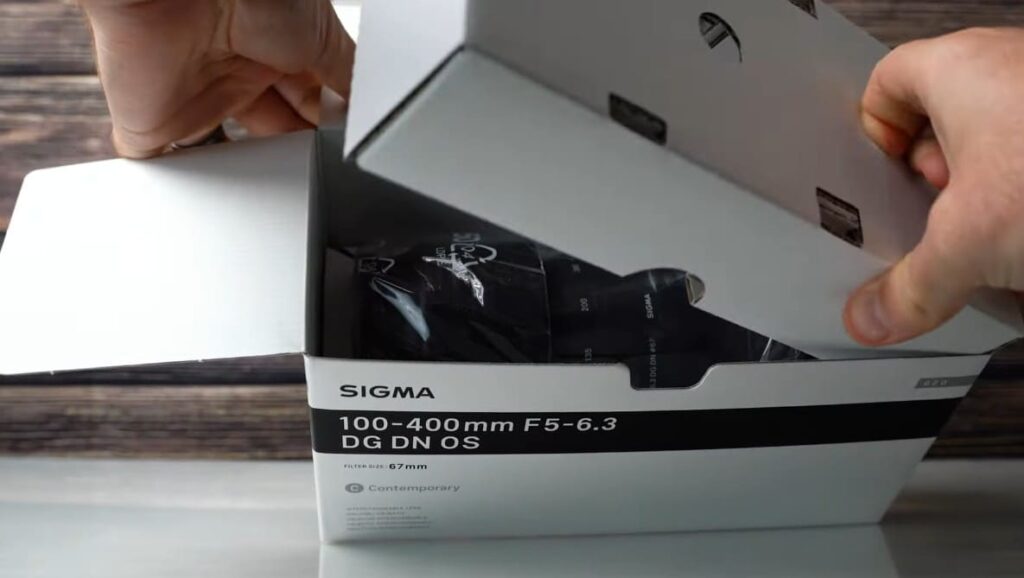
The Sigma 100-400mm f/5-6.3 DG OS HSM is a versatile lens suitable for sports and wildlife photography. This lens features an Optical Stabilizer (OS) that helps minimize camera shake, and Hyper Sonic Motor (HSM) technology to provide fast and accurate autofocus performance. The zoom range of this lens makes it perfect for capturing a variety of subjects from far away. The lens also includes two FLD glass elements and three SLD glass elements to correct aberrations, as well as Super Multi-Layer Coating to reduce flare and ghosting.
Photographers can customize the focus mode selector switch on this lens for various shooting styles such as manual, auto, and continuous focusing. Additionally, the dust and splash-proof construction of this lens makes it ideal for outdoor shooting. This lens is compatible with both Canon EF and Nikon F mount cameras, as well as other mounts with an optional Sigma Mount Converter. With excellent optical performance, the Sigma 100-400mm f/5-6.3 DG OS HSM is a great choice for any photographer looking to capture high-quality images.
In addition to its great optics, the Sigma 100-400mm f/5-6.3 DG OS HSM also offers several practical features that make photography easier and more enjoyable. The lens includes a zoom lock switch to prevent lens creep when the camera is pointed downward, as well as a lens hood with a petal shape for maximum protection against unwanted light. Furthermore, the lens also features two focus limiter switches that can be adjusted to limit the autofocus range for faster-focusing performance. This makes it easier to capture fast-moving subjects in any situation. Lastly, photographers can benefit from the zoom magnification indicator which helps them keep track of their focal length settings when zooming in or out.
Sony 100-400 vs Sigma 100-400
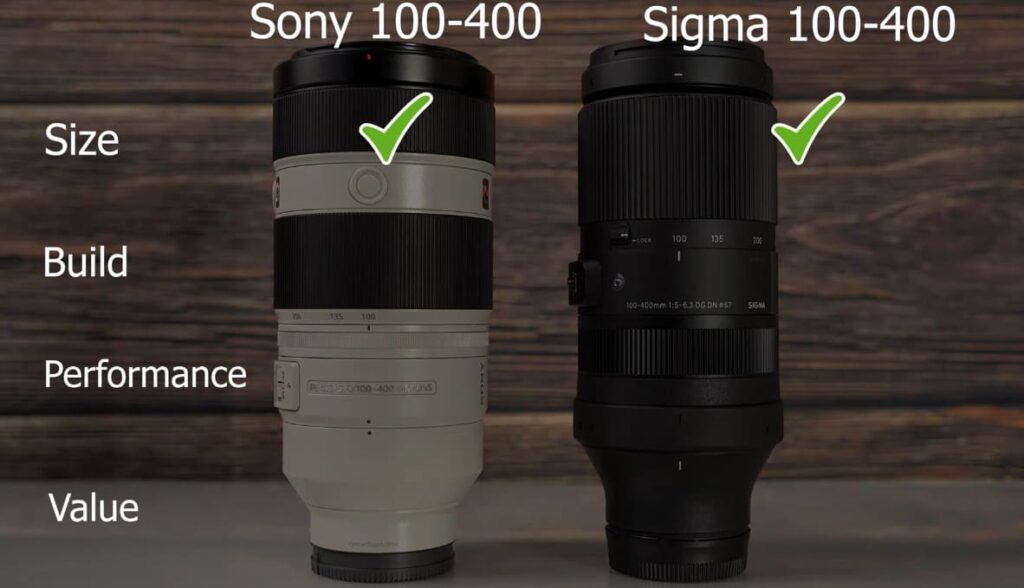
Size and weight comparison
When it comes to size and weight, the Sony 100-400 lens emerges as the clear winner. Weighing just 29 ounces, it is significantly lighter than the Sigma 100-400 lens, which tips the scales at 67 ounces – more than twice as heavy. Not only that, but the Sony lens also boasts a shorter length of around 3 inches compared to its Sigma counterpart. This compact design makes it incredibly convenient to carry around during long hikes or any outdoor photography session, ensuring maximum comfort and ease of use. So, whether you’re capturing breathtaking landscapes or chasing fleeting wildlife moments, the Sony 100-400 lens will undoubtedly be your trusted companion, providing exceptional performance without weighing you down.
Optical performance comparison
In terms of optical performance, both lenses offer similar levels of sharpness and contrast across all focal lengths, ensuring excellent image quality. However, the Sony 100-400 lens has a slight advantage in autofocus speed and accuracy, making it ideal for capturing fast-moving subjects or dynamic scenes with precision. Moreover, the Sony lens outperforms the Sigma lens in low-light situations due to its wider maximum aperture of f/4.5, allowing for better light-gathering capabilities and improved versatility in challenging lighting conditions. With these added features, the Sony 100-400 lens provides photographers with enhanced capabilities and greater flexibility to capture stunning images in various shooting scenarios.
Lens mount compatibility
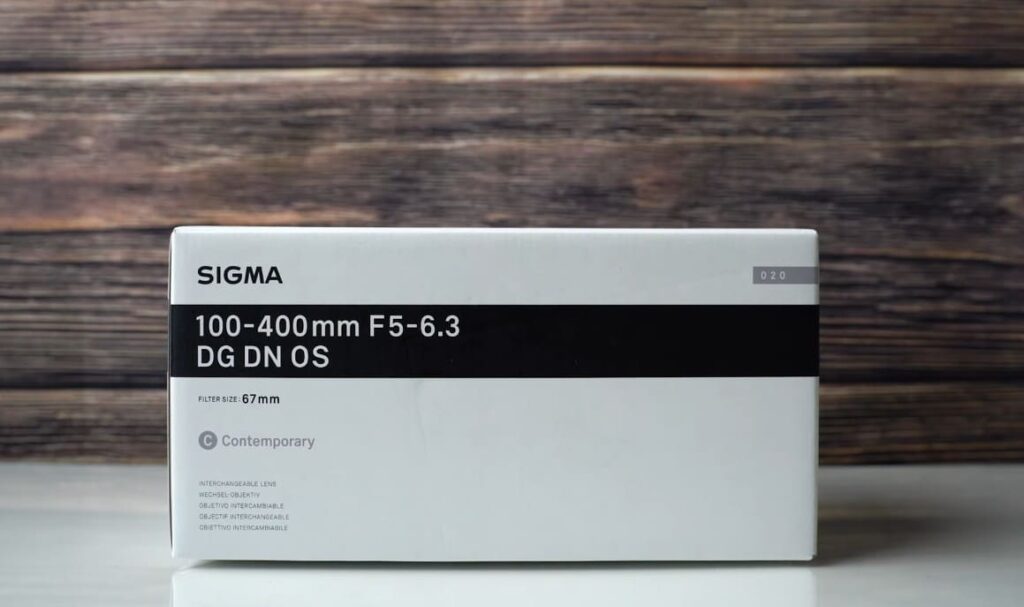
The Sony 100-400 lens is specifically designed to be compatible with E-Mount cameras, ensuring optimal performance and seamless integration. On the other hand, the Sigma 100-400 lens offers compatibility with Canon and Nikon mounts, providing versatility for photographers who use different camera systems or brands. Having these options allows you to effortlessly switch between camera setups based on your specific requirements and preferences. With these lenses, you can capture stunning images and explore the potential of different camera systems with ease.
Focal range and extra features
Both lenses, the Sony 100-400 and the other one, offer an impressive 100-400mm focal range, allowing you to effortlessly capture close-up shots of wildlife or beautifully detailed distant landscapes. However, the Sony 100-400 takes it a step further by featuring an ED (Extra-low Dispersion) element, which effectively corrects chromatic aberration and enhances contrast for even more stunning image quality. Not stopping there, it also boasts a brand new Optical SteadyShot image stabilization system, ensuring that your handheld shots are incredibly sharp and blur-free. With these advanced features, the Sony 100-400 lens is truly a remarkable choice for any photography enthusiast looking to elevate their craft.
Price comparison
The Sony 100-400 lens, widely recognized for its exceptional optical quality and performance, stands out among its competitors. With its advanced features and superior build, this lens has gained a reputation for capturing stunning images with remarkable clarity and sharpness.
When it comes to pricing, the Sony lens does come at a higher price point compared to the Sigma 100-400 lens. The Sony lens is available at prices ranging from $1,998 to $2,498, depending on the retailer. However, it’s important to note that the investment in this lens is justified by the outstanding results it delivers, making it a preferred choice for professional photographers and enthusiasts who prioritize image quality.
On the other hand, the Sigma lens offers a more budget-friendly option without compromising on performance. Priced at approximately $1,200 to $1,500, it provides an excellent alternative for photography enthusiasts who are mindful of their budget but still want to achieve impressive results.
What type of photography are the Sigma 100-400 and Sony 100-400 lenses good for?
The Sigma 100-400 and Sony 100-400 lenses are excellent for sports and wildlife photography. They have a wide range of focal lengths which makes them perfect for capturing fast-moving objects, such as an eagle flying across the sky or a football match in action. Additionally, their large maximum aperture allows photographers to capture good-quality images even in low-light conditions. They also have excellent autofocus capabilities, making them a great choice for capturing sharp images of even moving subjects. In addition, they are very lightweight and compact lenses which make them easy to carry around with you. With these lenses, you can get professional-quality photos without having to lug around heavy equipment.
In short, the Sigma 100-400 and Sony 100-400 lenses are great for sports and wildlife photography thanks to their wide range of focal lengths, large maximum aperture, excellent autofocus capabilities, and lightweight and compact design. They allow photographers to capture stunning images in even the most challenging conditions.
In addition, they can also be used for macro photography as they have a minimum focusing distance of just under 3 feet (0.9 m). This makes them a great choice for capturing close-up shots of small subjects such as flowers, insects or other tiny objects. Moreover, their wide range of focal lengths allows photographers to get the perfect composition and framing when shooting macro photos.
Overall, the Sigma 100-400 and Sony 100-400 lenses are exceptional pieces of photography equipment that can help you take stunning photos in a variety of conditions. Whether you are shooting sports, wildlife, or macro photography, these lenses can be an invaluable tool for capturing professional-quality images.
Beyond that, they can also be used for portraiture and landscape photography as well. With their focal length range and wide maximum aperture, photographers can get excellent depth of field control when shooting portraits and landscapes. Additionally, their lightweight and compact design makes them perfect for travel photography, enabling you to capture stunning images wherever your journey takes you.
What do you need to know before choosing camera lenses?
When it comes to choosing camera lenses, there are a few factors that should be taken into consideration. First and foremost, you need to take into account the size of the sensor in your camera. Different-sized sensors require different focal lengths for optimal image quality. For example, if you’re shooting on a full-frame camera, then you’ll need lenses that are designed for full-frame sensors.
Additionally, you’ll want to consider the type of photography you plan on doing most frequently – typically, wide-angle lenses are better suited for landscape photography while telephoto lenses work better for capturing distant subjects such as wildlife or sports events. It’s also important to take into account the available light when selecting a lens.
If you plan on shooting in low-light conditions, then a lens with a lower maximum aperture (or “f-stop”) will be more beneficial as it allows more light to reach the sensor. Lastly, consider your budget when shopping for lenses – while some lenses may have longer focal lengths or wider apertures than others, that doesn’t necessarily mean they’ll deliver better image quality. Be sure to do your research and test out various lenses before making a final decision.
By taking all of these factors into account, you can ensure that you find the perfect camera lens for your needs. For those who are just starting in photography or looking to upgrade their current gear, don’t be afraid to ask for advice from experienced photographers. Doing so can help you find the perfect lens that meets both your budget and photography needs. With a little bit of research, you’ll soon find yourself with a lens that will help you capture stunning images.
For those who are looking for more advanced lenses, there are also specialty lenses available that offer unique features such as tilt-shift capabilities or macro capability. Be sure to research the different types of lenses available and decide which ones best suit your needs before making a purchase. By taking the time to find the perfect lens, you’ll be able to capture amazing photos that will last a lifetime.
Lastly, remember that camera lenses are an investment so it’s important to choose wisely. If you take the time to research and compare different lenses, you’ll be sure to find one that will help you capture stunning images for years to come.
FAQ
Is the Sony 100-400mm good for wildlife?
Yes, the Sony 100-400mm is a great lens for wildlife photography thanks to its impressive range and sharp image quality. It’s also weather sealed which makes it ideal for outdoor shooting conditions. Additionally, the lens has an advanced focusing system that helps with fast and accurate autofocus performance. Finally, the lens comes with built-in Optical SteadyShot image stabilization, which helps reduce camera shake when shooting handheld. All of these features make the Sony 100-400mm an ideal choice for wildlife photographers looking for a versatile and reliable lens.
What should I look for in a birding lens?
When choosing a lens for birding, there are several important factors to consider. First, you’ll want to make sure the lens has a long focal length, as this will allow you to get close-up shots of your feathered friends. Additionally, image quality is paramount when it comes to birding lenses; look for one with excellent sharpness and contrast. Lastly, it’s important to make sure the lens has fast autofocus performance and good low-light performance. With these features, you’ll be able to get clear, sharp images of birds no matter the conditions.
What is the best lens for landscape photography?
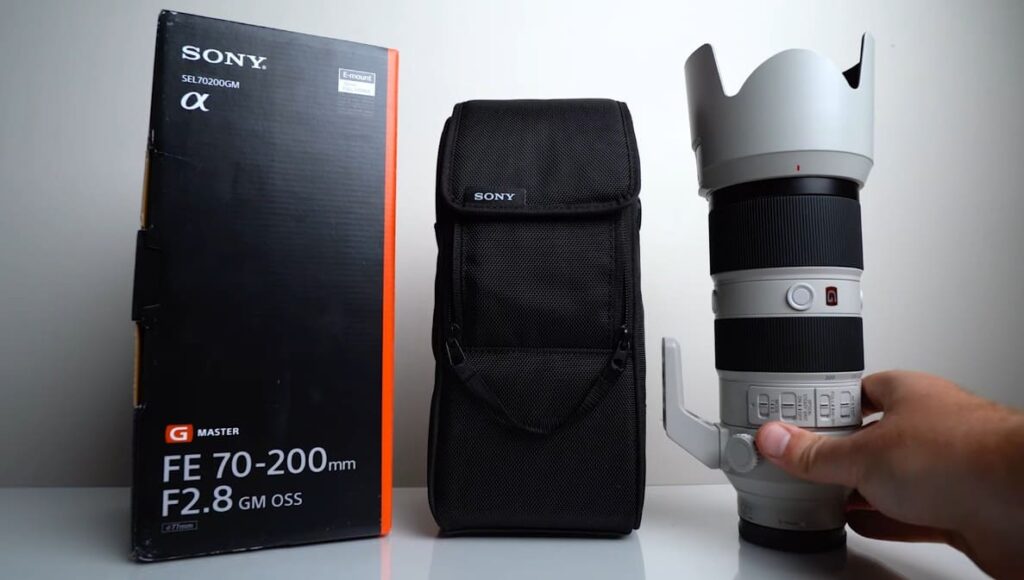
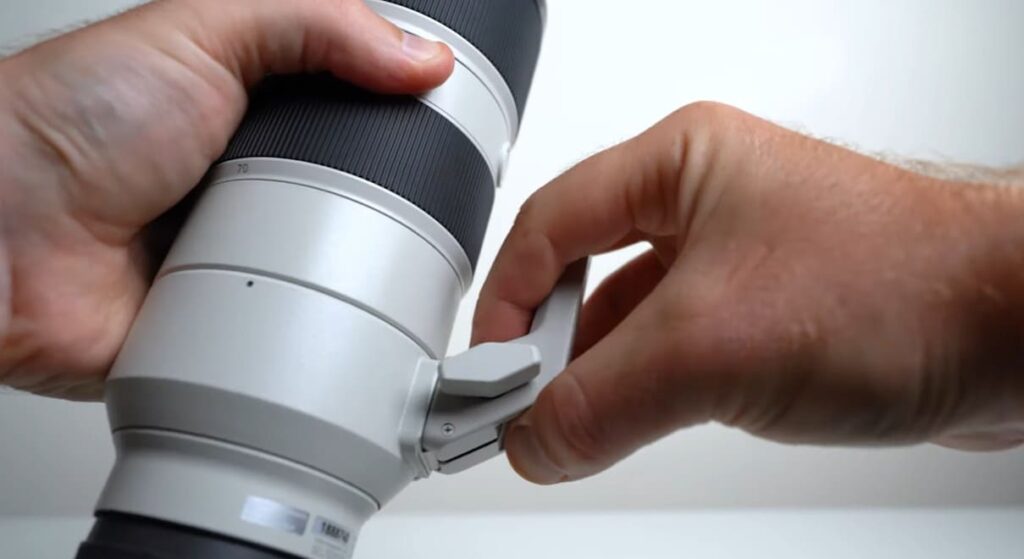
The best lens for landscape photography depends on your specific needs and style. However, some good options include wide-angle lenses such as the Canon 16-35mm f/4L IS USM, Sony 16-35mm f/2.8 GM, and Tamron 15-30mm f/2.8 VC. These lenses allow you to capture expansive scenes with ease. Additionally, some telephoto lenses such as the Canon 70-200mm f/4L IS USM, Sony 70-200mm f/2.8 GM OSS, and Sigma 150-600mm f/5-6.3 DG OS HSM are great for compressing the background and allowing you to bring distant subjects closer. With either type of lens, you’ll be able to capture stunning landscape images.
What is the sharpest aperture for Sigma 100-400?
The sharpest aperture for the Sigma 100-400 lens is generally considered to be f/8. At this aperture, the lens excels in producing exceptionally crisp and detailed images, with optimal contrast. Moreover, when shooting at longer focal lengths, using a smaller aperture not only enhances sharpness but also allows for an increased depth of field, making it particularly advantageous for landscape photography where capturing intricate details in both foreground and background is desired. Nevertheless, it is always recommended to explore and experiment with different apertures to discover the perfect setting that complements the specific scene you are aiming to capture.
What is a good lens for astrophotography?
The best lens for astrophotography depends on your needs and budget, but some great options include ultra-wide angle lenses such as the Rokinon 14mm f/2.8 IF ED UMC, Samyang 16mm f/2.0 ED AS UMC CS, and Sigma 20mm f/1.4 DG HSM Art. These lenses allow you to capture a wide field of view and make the most of the night sky’s spectacular starscapes. Additionally, some telephoto lenses such as the Tamron 70-200mm f/2.8 Di VC USD G2, Canon EF 70-200mm f/4L IS II USM, and Sigma 150-600mm f/5-6.3 DG OS HSM Sports are great for capturing the Milky Way in all of its glory. Whichever lens you choose, make sure it is optimized for low light conditions to ensure optimal image quality when shooting at night.
Is a Sigma 100 400 Sharp?
Yes, the Sigma 100-400mm lens is very sharp and produces excellent image quality. This lens has a wide maximum aperture of f/5-6.3, which allows you to capture images with great clarity and contrast even in low-light conditions. It also features Sigma’s proprietary Optical Stabilization (OS) technology for reducing camera shake when shooting handheld, as well as an advanced autofocus system that helps ensure fast and accurate focusing. With all of these features, the Sigma 100-400mm is a great choice for anyone looking for a sharp and reliable lens.
Is it worth getting a superzoom lens?
Yes, a superzoom lens can be very beneficial for photographers who need flexibility in focal length. These lenses typically have a 10x or greater zoom range and allow you to capture wide-angle shots as well as close-up shots of distant subjects. Additionally, many modern superzoom lenses are equipped with features such as built-in image stabilization and fast autofocus performance, making them ideal for a variety of photography styles. So if you’re looking for a versatile lens that can cover a wide range of focal lengths, then investing in a superzoom lens could be worth it.
Do the Sony 100-400 and Sigma 100-400 come with filter threads?
Yes, both the Sony 100-400mm and Sigma 100-400mm lenses come with filter threads. The Sony lens has a 72mm thread size while the Sigma lens has a 77mm thread size. This allows you to attach commonly available filters such as UV, polarizing, neutral density, and other filters for enhanced image quality. Additionally, some of these lenses also come with a dedicated lens hood, which helps minimize flares and glare when shooting in bright conditions. With these features, both the Sony and Sigma 100-400mm lenses are great options for any photographer looking to take their photography to the next level.
What are the other specifications of the Sony 100-400 GM?
The Sony 100-400mm GM lens is a versatile and reliable telephoto zoom lens that can be used for a variety of applications. It has a 35mm equivalent focal length of 152-608mm, making it great for capturing distant subjects such as wildlife or landscapes. Additionally, the lens features an 11-blade circular aperture to produce beautiful bokeh effects. It also has a minimum focusing distance of 3.22′ (0.98 m) and a maximum magnification ratio of 0.31x, allowing you to get up close and personal with your subjects for greater detail. Furthermore, the lens is dust- and moisture-resistant, making it ideal for outdoor shooting in challenging conditions. All in all, the Sony 100-400mm GM is a great choice for any photographer looking for a high-quality and versatile lens.
What are the advantages of using a wide-angle lens for landscape photography?
Wide-angle lenses have several advantages when it comes to landscape photography. First, they allow you to capture expansive scenes with ease by covering more area in the frame than other lenses. Additionally, wide-angle lenses help to compress the foreground and background elements together, creating a more dynamic image. This is especially useful when shooting in environments with strong depth cues such as mountains or vast open fields. Furthermore, wide-angle lenses have a shallower depth of field than other lenses, helping you add an extra layer of dimensionality when capturing stunning landscape vistas. All these features make wide-angle lenses an essential tool for landscape photographers.
Conclusion
So, Sony 100-400mm and Sigma 100-400mm are both great lenses for wildlife photography. They both provide excellent image quality, strong build quality, and highly useful features such as image stabilization and weather-sealing. But the Sigma 100-400mm offers more reach at 400mm and faster autofocus performance. Additionally, it is also a much cheaper lens than the Sony version. For these reasons, we believe that the Sigma 100-400mm is the better choice for wildlife photography.
Overall, both are great lenses but the Sigma wins out in terms of value and performance. We strongly recommend this lens to anyone looking for a reliable telephoto lens for wildlife photography. With its combination of reach, price, and features, it is an excellent option that won’t break the bank.