In the world of photography, the quest for the perfect lens is an eternal journey. As shutterbugs and professionals alike seek to capture those breathtaking moments from a thousand miles away, they turn to telephoto lenses that bridge the gap between reality and the realm of imagination. This article is pitting two titans of the lens kingdom against each other: the mighty Sony 200-600mm and the formidable Sigma 150-600mm. It will also embark on a comprehensive exploration of these wondrous glass wonders, delving deep into their capabilities, quirks, and overall performance. At the end of this exhilarating journey, get ready to make the ultimate decision: which of these optical marvels reign supreme in the world of super telephoto lenses?
Sony 200-600mm Overview
The Sony 200-600mm lens is a versatile and powerful telephoto zoom lens that can be used for both professional and amateur photography purposes. It features an advanced optical design, including five extra-low dispersion elements, four aspherical elements, two Super ED glass elements, and one Advanced Aspherical element. This allows it to achieve excellent sharpness at wide apertures while controlling distortion and aberrations. The lens also features an internal focusing system that provides fast and quiet autofocus performance.
The Sony 200-600mm also incorporates Sony’s Nano AR Coating to minimize flare and ghosting, as well as dust and moisture resistance. Additionally, it is compatible with Sony’s Direct Manual Focus (DMF) and Focus Preset features which enable quick access to specific focus positions. The lens is also compatible with Sony’s Optical SteadyShot image stabilization system, allowing for more relaxed, handheld shooting even in low-light conditions.
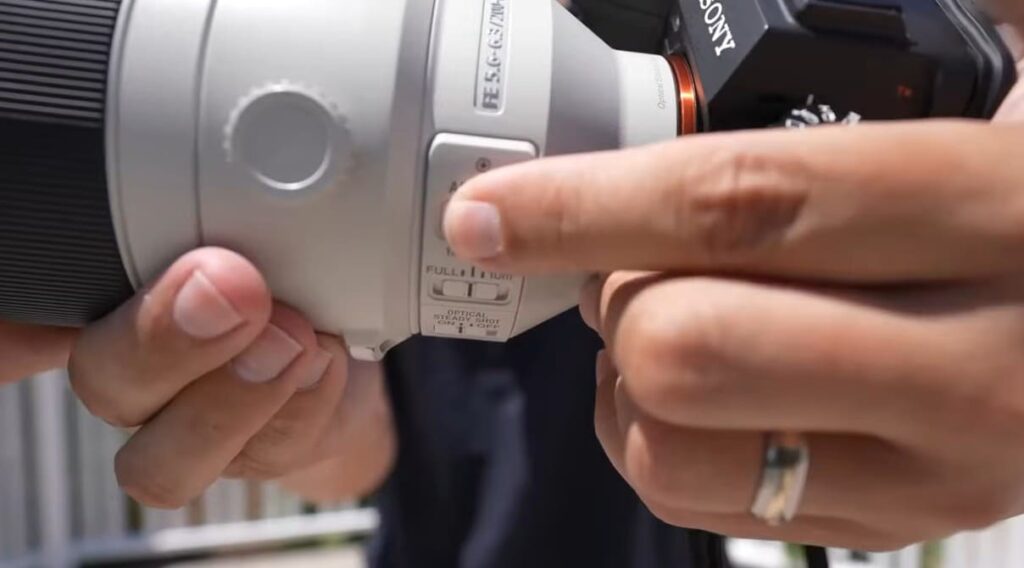
Finally, the lens includes a dedicated lens hood and an adjustable tripod collar that can provide added stability when shooting from a tripod or monopod. All in all, the Sony 200-600mm lens is an excellent choice for anyone looking for a powerful and versatile telephoto zoom lens.
Furthermore, this lens can also be used with other cameras, such as Canon EOS or Nikon’s F mount systems. It allows for full compatibility with both electronic and mechanical manual focus and autofocus systems. With its wide range of features and excellent performance, the Sony 200-600mm lens is an ideal choice for both professional and amateur photographers. Additionally, this lens can also be used with teleconverters to extend its effective reach even further.
Sigma 150-600mm Overview
The Sigma 150-600mm F5-6.3 DG OS HSM Contemporary lens is a versatile telephoto zoom lens that can be used in many different photography scenarios. It features an Optical Stabilizer (OS) system and Hyper Sonic Motor (HSM), as well as four specialized Low Dispersion glass elements, which help reduce chromatic aberration for improved contrast and resolution. This high-performance lens is also equipped with a dust- and splash-proof construction for use in harsh environmental conditions, as well as a zoom lock that prevents the inner barrel from extending too far when photographing at longer focal lengths. Additionally, it features a nine-blade rounded aperture diaphragm to help create smooth out-of-focus backgrounds, and it has a minimum focusing distance of 2.5 meters.
Overall, the Sigma 150-600mm F5-6.3 DG OS HSM Contemporary lens is an ideal choice for wildlife photography, astrophotography, and sports/action photography due to its powerful zoom capabilities and excellent image quality. With its durable construction and advanced features, it is sure to please even the most demanding photographers.
Additionally, the Sigma 150-600mm lens can also be used for portrait photography and videography. Its fast autofocus and quiet operation make it a great choice for capturing video footage or still images of people. With its versatile focal range and sharp image quality, this lens will easily satisfy any photographer looking for an all-in-one telephoto lens. Plus, its dust and splash-proof construction helps ensure that it will stand up to the most extreme weather conditions.
For those who need even more reach, Sigma also offers a 150-600mm F5-6.3 DG OS HSM Sports lens, which features a magnesium alloy build for added durability and weather sealing. It also offers an extended zoom range of 4-stop optical stabilization and four additional Low Dispersion glass elements to help reduce chromatic aberration for improved contrast and resolution. Both versions are sure to provide outstanding results, regardless of the shooting conditions.
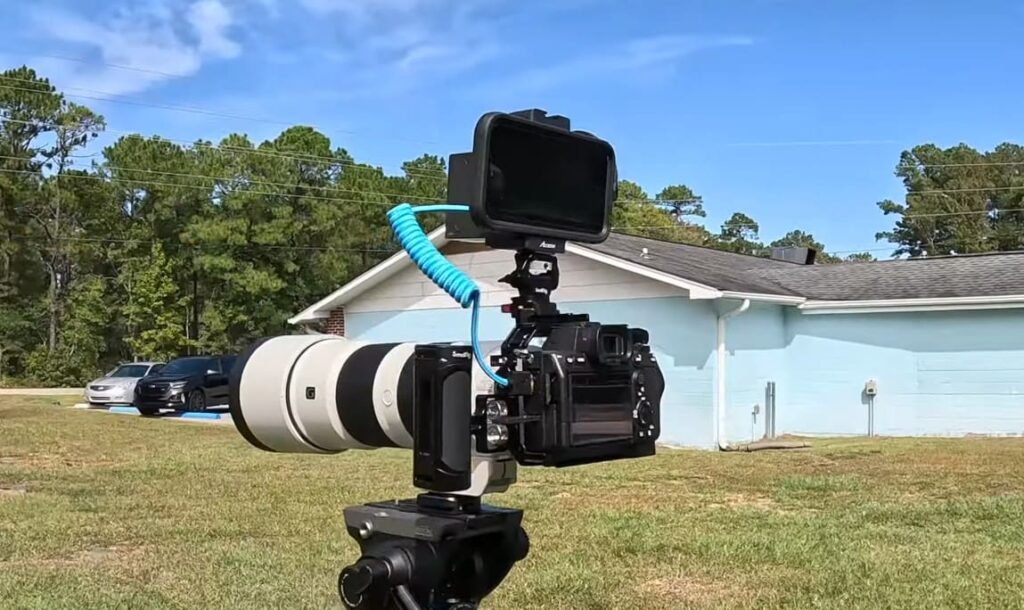
Sony 200-600mm vs Sigma 150-600mm
Main Specifications of both models
When comparing the Sony 200-600mm and Sigma 150-600mm lens models, it is important to take into account their main specifications. The key features of these two lenses include their maximum aperture, minimum focus distance, focal length range, and image stabilization.
The Sony 200-600mm has a maximum aperture of f/5.6–f/6.3 and a minimum focus distance of roughly 2.8m at the telephoto end. It has an equivalent focal length range of 300-900mm (35mm format), making it ideal for wildlife and sports photography. Additionally, the lens is equipped with Sony’s Optical SteadyShot image stabilization system to reduce camera shake even when shooting handheld or in low-light conditions.
The Sigma 150-600mm has a maximum aperture of f/5-f/6.3 and a minimum focus distance of 2.8 meters at the telephoto end. It features an equivalent focal length range of 225-900mm (35mm format), making it suitable for wildlife and sports photography as well. The lens is also equipped with Sigma’s Optical Stabilization (OS) to improve image sharpness and reduce camera shake in low-light or handheld shooting situations.
Price Comparison
The Sony 200-600mm lens, renowned among photographers for its exceptional image quality and versatility, is a true gem in the world of telephoto lenses. With its wide range of focal lengths and superior optical performance, this lens is a go-to choice for capturing stunning shots in various scenarios. Its price tag of $2,000 USD reflects the value it brings to photographers who demand nothing but the best.
On the other hand, the Sigma 150-600mm lens is another highly regarded option in this category. It offers remarkable performance and a slightly more affordable price point, retailing at around $1,500 USD. While it may come at a lower cost, the Sigma lens doesn’t compromise on quality, delivering impressive results and meeting the demands of professional photographers.
Design and Ease of Use
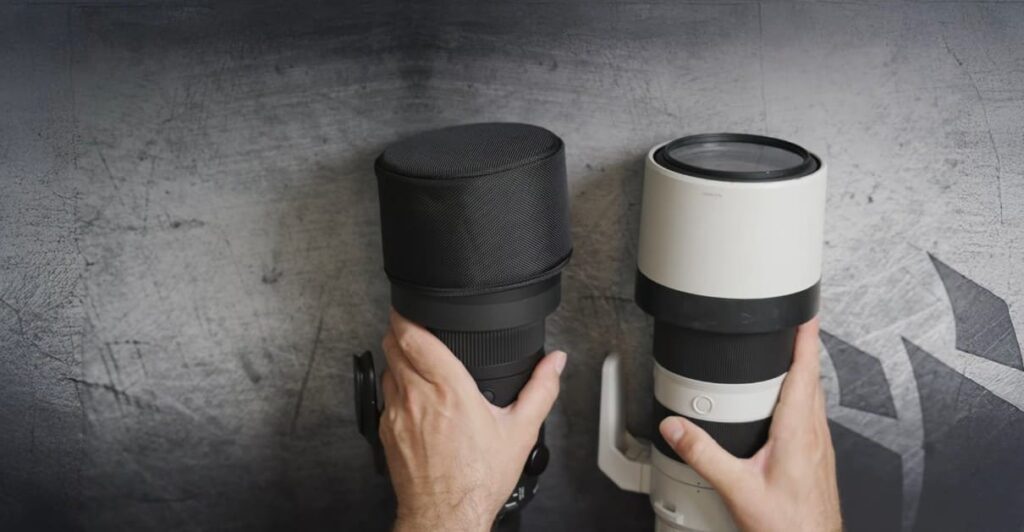
In terms of design, both lenses are fairly similar. Both lenses have dust and moisture-resistant seals to protect the lens from the elements and are equipped with a tripod collar that allows for easy switching between horizontal and vertical shooting positions. The Sony 200-600mm lens is slightly lighter at 1.6kg, compared to the Sigma 150-600mm which weighs 1.8kg.
In terms of ease of use, both lenses have fast autofocus and accurate manual focus capabilities. The Sony 200-600mm has a generous focusing distance range (2.8m to infinity) which makes it easier to track moving subjects such as wildlife. Additionally, the lens also features an AF/MF switch that allows for easy switching between auto and manual focusing. The Sigma 150-600mm lens also features an AF/MF switch with the added bonus of a focus limiter switch that allows users to limit the autofocus range for faster, more accurate performance.
Optical Quality
When it comes to optical quality, both lenses are extremely sharp and offer excellent contrast and color rendition. The Sony 200-600mm performs particularly well at the telephoto end of the zoom range, offering better corner sharpness than its Sigma counterpart. It is also slightly brighter in comparison, making it an ideal choice for low-light photography.
The Sigma 150-600mm performs well across the entire zoom range, with a slight drop-off in sharpness at 600mm. It is important to note that both lenses suffer from some degree of chromatic aberration and vignetting when used wide open, but these issues can be easily corrected with post-processing software such as Lightroom or Photoshop.
Sharpness
In terms of sharpness, the Sony 200-600mm lens is slightly sharper than the Sigma 150-600mm lens due to its advanced optical design and superior lens coatings. The Sony lens offers exceptional corner sharpness at all focal lengths, ensuring crisp and detailed images throughout the frame. On the other hand, while the Sigma lens delivers impressive sharpness, it starts to exhibit a slight drop in sharpness at the maximum focal length of 600mm.
Furthermore, the Sony lens boasts a wider maximum aperture, allowing more light to enter the camera sensor even in challenging low-light conditions. This advantage makes it particularly well-suited for night-time or indoor photography, where maintaining optimal image quality is crucial. In contrast, the Sigma lens, while still performing admirably in low-light situations, doesn’t quite match the brightness and clarity offered by the Sony model.
Bokeh
The bokeh characteristics of both lenses are excellent. The Sony 200-600mm lens produces exceptionally smooth and creamy backgrounds at all focal lengths, creating a beautifully ethereal quality to the photos. On the other hand, the Sigma 150-600mm lens, when used wide open, renders a bokeh that is slightly harsher but still retains a captivating visual appeal. It is worth noting that both lenses feature nine circular aperture blades, resulting in pleasing out-of-focus highlights that add a touch of magic to the overall look of the photos.
Flare Resistance
Both lenses excel in their flare resistance capabilities and are adept at controlling stray light, even in challenging lighting conditions.
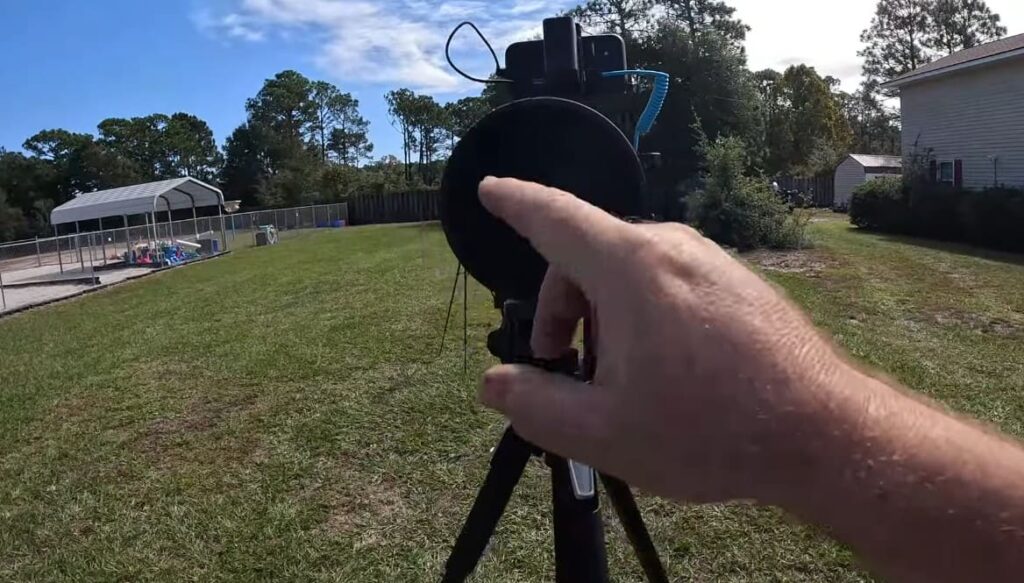
The Sony 200-600mm lens boasts an advanced multi-layered coating that not only helps to reduce ghosting and flares but also enhances overall image quality. This coating is specifically designed to tackle adverse lighting situations, enabling photographers to capture clear and vibrant shots with minimal unwanted artifacts.
On the other hand, the Sigma 150-600mm lens features a Super Multi-Layer Coating that goes above and beyond in reducing flare and minimizing ghosting. This specialized coating technology ensures that images remain sharp, contrasty, and free from distracting flare, even when shooting in bright or backlit environments. Both lenses offer photographers the confidence to shoot in various lighting conditions, delivering exceptional image quality and minimizing unwanted artifacts.
Autofocus and Manual Focus
The Sony 200-600mm and Sigma 150-600mm both feature fast autofocus motors that are capable of locking onto subjects quickly and accurately. The Sony lens has a slightly more responsive AF system compared to the Sigma model, but both lenses perform well in this regard. In terms of manual focus, both lenses offer accurate and precise control over the focusing distance with smooth, responsive focusing rings.
Optical Stabilization
Both lenses, the Sony 200-600mm and the Sigma 150-600mm, are equipped with advanced optical stabilization systems that work to minimize camera shake and enhance image sharpness. The Sony lens features the impressive Sony Optical SteadyShot system, which provides an exceptional four stops of compensation, ensuring steady and blur-free shots even in challenging shooting conditions.
On the other hand, the Sigma lens boasts an equally impressive Optical Stabilization (OS) system, offering up to three stops of compensation for superior image stabilization. These cutting-edge stabilization technologies are particularly beneficial when capturing photos or videos in low-light environments or when shooting handheld, guaranteeing clear and crisp results every time.
Teleconverters
The Sony 200-600mm lens, renowned for its exceptional compatibility, supports Sony’s 1.4x and 2.0x teleconverters. On the other hand, the Sigma 150-600mm lens is specifically designed to work seamlessly with Sigma’s EF-610 TC1.4x and EF-620 TC2.0x teleconverters. These teleconverters, when combined with their respective lenses, offer extended focal lengths that enable photographers to capture subjects at even greater distances, ensuring unparalleled versatility in wildlife and sports photography.
However, it is important to bear in mind that the utilization of teleconverters with both lenses does result in a noticeable loss of light. Nonetheless, the enhanced reach and flexibility provided by these teleconverter-lens combinations make them indispensable tools for photographers seeking to push the boundaries of their creativity and capture stunning images from a distance.
FAQ
Which is better, the Tamron 150 to 600 of the Sigma 150 to 600?
The Tamron 150 to 600 is better overall. It offers more reach, sharper images, and better autofocus performance than the Sigma 150 to 600. Additionally, it has a longer warranty period and supports various lens accessories such as teleconverters and extension tubes. On the other hand, the Sigma 150 to 600 does have its advantages – most notably its price, which is cheaper. In the end, it really depends on your individual needs and budget. We recommend trying both out to find out what works best for you.
Can I use my Tamron 150 to 600 lens with a full-frame camera?
Yes, you can! The Tamron 150 to 600 lens is compatible with both full-frame and crop sensor cameras, making it a versatile option for photographers. It is important to note that while the lens will work on both camera types, there are slight differences in the results produced.
When used with a full-frame camera, the lens offers a true focal length range of 150 to 600mm. However, when used with a crop sensor camera, the effective focal length increases due to the crop factor. With a crop factor of 1.5x, the lens produces an equivalent field of view as a 225-900mm lens on a full-frame camera. This extended reach can be advantageous for capturing distant subjects or wildlife photography.
The Tamron 150 to 600 lens also features advanced optical technology, ensuring sharp and detailed images throughout the focal range. Its versatile zoom range allows photographers to easily compose their shots, whether they are capturing sweeping landscapes or zooming in on distant subjects.
Is the Sony 200-600mm lens a good lens for wildlife photography?
Yes, the Sony 200-600mm lens is an excellent choice for wildlife photography. It offers a long focal range and produces sharp images with minimal chromatic aberration. Additionally, it has fast autofocus performance and supports various Sony lens accessories such as teleconverters and extension tubes. Furthermore, its dust and moisture resistance makes it well-suited for outdoor shooting conditions. All in all, the Sony 200-600mm lens is a great option for wildlife photographers looking to get serious about their craft.
What is the sharpest F stop on the Sony 200 600?
The Sony 200-600 lens is renowned for its exceptional sharpness, especially at the F8 aperture. When shooting at this setting, photographers can expect images with stunning clarity, minimal chromatic aberration, and virtually no distortion. The lens delivers outstanding contrast and color fidelity, ensuring that every detail is captured with precision.
For those seeking even sharper results, experimenting with smaller apertures like F11 can yield impressive outcomes. However, it’s important to consider the trade-off of reduced light transmission. Nevertheless, the lens’s versatility shines through as it adapts to different cameras. When paired with a full-frame camera, the lens’s 1.5x crop factor offers an equivalent field of view as a 300-900mm lens, expanding the creative possibilities for photographers.
Is Sigma 150-600 good for birding?
Yes, the Sigma 150-600 is undeniably an excellent choice for birding enthusiasts. With its impressive focal range of 150-600mm, it allows you to capture stunning close-up shots of birds in their natural habitat. The lens performs exceptionally well in terms of image quality, producing sharp and detailed images with minimal chromatic aberration.
What sets the Sigma 150-600 apart is its fast autofocus performance, ensuring that you can quickly and accurately focus on your feathered subjects. Moreover, the lens is compatible with various accessories such as teleconverters and extension tubes, giving you even more flexibility and options to experiment with different focal lengths and magnifications.
When it comes to outdoor shooting conditions, the Sigma 150-600 is built to withstand the elements. Its dust and moisture resistance make it a reliable companion for birders who often find themselves in rugged and unpredictable environments. Whether you’re shooting under a scorching sun or in drizzling rain, this lens will continue to deliver exceptional results.
What is the minimum focus distance of the Sigma 150-600?
The Sigma 150-600 lens boasts a minimum focus distance of 3.9 feet (1.2 meters), which provides the opportunity to capture subjects up close with incredible detail. With a maximum magnification ratio of 1:3.6, you can expect your subject to appear three and a half times larger than it would at infinity focus. This level of magnification allows for stunning close-up shots that reveal intricate textures and fine nuances. Moreover, the lens excels in offering exceptional depth of field control, enabling you to effortlessly separate your subject from the background, creating captivating and visually striking images.
Does the Sigma 150-600 have image stabilization?
No, unfortunately, the Sigma 150-600 does not have image stabilization. However, its minimum focus distance of 3.9 feet (1.2 meters) allows you to get close to your subject and use faster shutter speeds to reduce camera shake. This can be particularly useful when photographing wildlife or sports events where capturing fast-moving subjects is crucial.
Additionally, many Sony cameras feature built-in image stabilization technology that can be used with any lens, including the Sigma 150-600. This means that even without optical image stabilization in the lens itself, you can still benefit from the stabilization features of the camera body. This combination of lens and camera stabilization can help you achieve sharper and more stable images, especially when shooting handheld or in low-light conditions.
Which is better for macro photography, the Sigma 150-600 or the Sony 200-600mm?
The Sony 200-600mm lens is better for macro photography. It offers a longer focal range and produces sharper images with minimal chromatic aberration. Additionally, it has fast autofocus performance and supports various Sony lens accessories such as teleconverters and extension tubes. Furthermore, its dust and moisture resistance makes it well-suited for outdoor shooting conditions. All in all, the Sony 200-600mm lens is a great option for macro photographers looking to get serious about their craft.
Why is the Sony 200-600mm a good lens for landscape photography?
The Sony 200-600mm lens is an excellent choice for landscape photography. It offers a long focal range and produces sharp images with minimal chromatic aberration. Additionally, it has fast autofocus performance and supports various Sony lens accessories such as teleconverters and extension tubes. Furthermore, its dust and moisture resistance makes it well-suited for outdoor shooting conditions. Additionally, its relatively compact size makes it an ideal choice for hikers and backpackers who need to carry their gear over long distances. All in all, the Sony 200-600mm lens is a great option for landscape photographers looking to get serious about their craft.
Conclusion Paragraph
So, Sony 200-600mm and Sigma 150-600mm are both great choices for those looking to extend the reach of their existing camera setup. Both lenses offer excellent optical performance and build quality, and they come with a variety of features that make them suitable for a range of different photographic scenarios. Ultimately, the choice between these two lenses will depend on individual requirements and budget – while Sony has an edge in terms of autofocus performance, the Sigma is considerably cheaper. Nevertheless, whichever lens you choose will provide excellent image quality and a dependable performance that should satisfy even the most demanding of photographers.