Over 50 million single-board computers have been sold worldwide, creating a massive ecosystem for creators and developers. This explosion in popularity means choosing the right board is more critical than ever for your project’s success.
The journey began in 2012 with the launch of a pioneering device from the UK. Its goal was simple: to promote computing skills in education. This small computer sparked a global movement.
Soon, other companies entered the market, offering powerful alternatives. Shenzhen Xunlong Software developed a line of cost-effective boards with diverse hardware options. These devices provide serious competition.
This guide will help you navigate the choice between these two leading brands. We will compare hardware, software, performance, and price. The “better” option truly depends on your specific needs, budget, and skill level.
Key Takeaways
- The single-board computer market has grown immensely, offering many choices.
- Both boards serve a large and active community of makers and developers.
- The original device was created with an educational mission in mind.
- Alternative boards often compete by offering different hardware configurations.
- Your final choice should be based on your project’s specific requirements.
- Factors like software support and accessory availability are crucial.
Introduction to Single-Board Computers
A quiet revolution began over a decade ago, putting powerful computing into the hands of millions. Single-board computers, or SBCs, evolved from specialized tools into mainstream marvels. They now power everything from classroom projects to complex industrial applications.
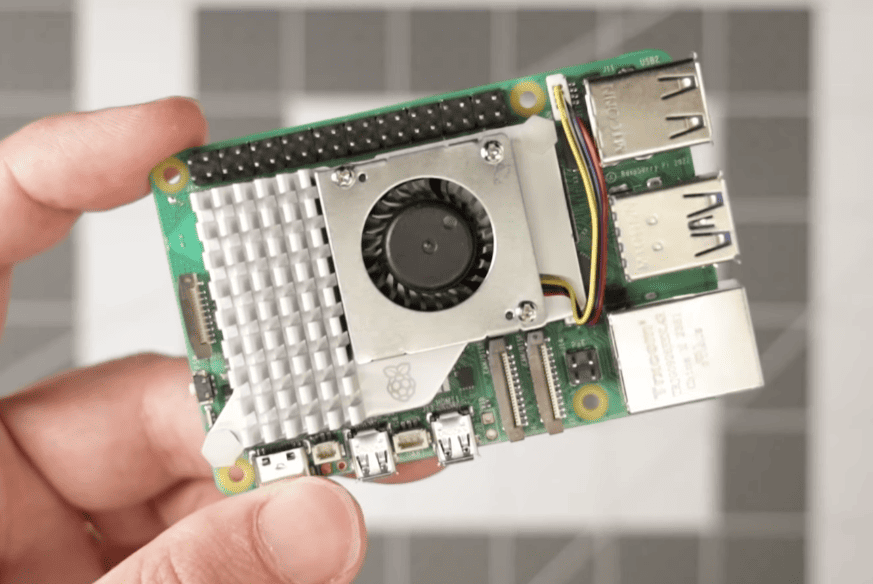
Evolution of SBCs in Hobbyist and Educational Markets
The market for these devices exploded in 2012. The Raspberry Foundation, a UK nonprofit, launched its first model. Its mission was to promote STEM education. This small board made coding and electronics accessible to all.
Seeing this success, other companies entered the scene. Shenzhen Xunlong introduced a family of SBCs as a cost-effective alternative. They offered diverse hardware configurations to attract different users. This competition fueled rapid innovation across the entire market.
Key Features and Historical Milestones
Both brands have achieved significant milestones. They released numerous models with improved processors, memory, and connectivity. The ecosystem of accessories and expansion boards grew immensely. This made the platforms incredibly versatile for countless projects.
A strong, global community is vital for any SBC’s success. Forums and tutorials provide essential support. While one community is larger, the other has grown steadily. Both offer vast resources for learners and creators.
| Year | Raspberry Pi Foundation | Shenzhen Xunlong |
|---|---|---|
| 2012 | Launches first Raspberry Pi model | Company founded |
| 2014-2016 | Releases Pi 2 and Pi 3 models | Introduces first Orange Pi boards |
| 2019-Present | Pi 4 and Pi 5 launch with significant upgrades | Expands lineup with powerful H6 and Rockchip models |
orange pi vs raspberry pi: Comparing Hardware Specifications
Hardware comparison reveals the true strengths and weaknesses of competing technology platforms. The core components determine what projects you can successfully build. Let’s examine the technical specifications that set these boards apart.
Processor, GPU, and Memory Differences
The Orange Pro features a powerful octa-core Rockchip RK3588S processor. This contrasts with the quad-core Arm Cortex-A76 found in the alternative board. Both processors operate at 2.4GHz but offer different core configurations.
Graphics performance shows significant variation. The Mali-G610 GPU delivers superior raw performance compared to the VideoCore VII. Memory options also differ substantially between the two platforms.
The Orange Pro supports up to 16GB of LPDDR5 RAM, offering faster speeds and better power efficiency. The competing device maxes out at 8GB of LPDDR4X memory. These differences impact multitasking and demanding applications.
Ports, Connectivity, and Expansion Capabilities
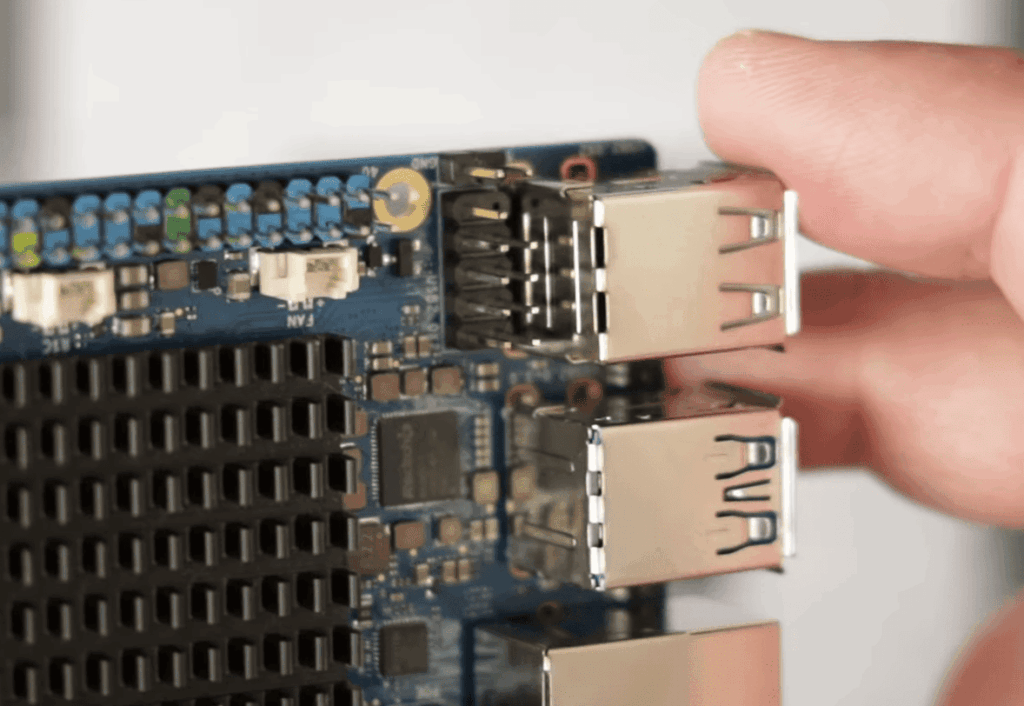
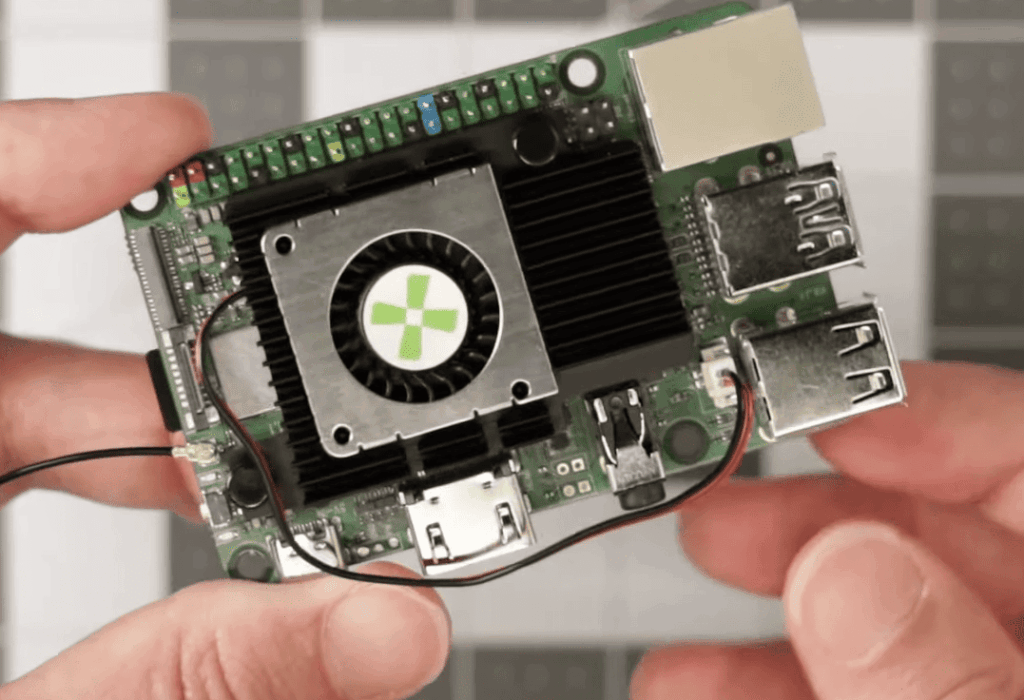
Input/output options vary considerably between the two devices. The Orange Pro provides one USB 3.0 port and three USB 2.0 connections. The alternative offers two of each type.
Both boards include gigabit ethernet and similar wireless capabilities. Expansion differs significantly with the Orange Pro featuring an M.2 slot and eMMC interface. The competing device uses a PCIe interface for expansion.
The physical form factor shows minor dimensional differences. GPIO headers are present on both, but the Orange Pro uses color-coded pins for easier identification. Power requirements are similar with USB-C connections.
| Specification | Orange Pi 5 Pro | Raspberry Pi 5 |
|---|---|---|
| Processor Cores | 8-core Rockchip RK3588S | 4-core Arm Cortex-A76 |
| Maximum RAM | 16GB LPDDR5 | 8GB LPDDR4X |
| USB 3.0 Ports | 1 | 2 |
| USB 2.0 Ports | 3 | 2 |
| Expansion Slot | M.2 + eMMC | PCIe Gen 2.0 |
Operating Systems & Software Ecosystem
When selecting between popular computing platforms, the available operating systems and software support can be the deciding factor. The right software environment transforms hardware potential into real-world success.

Official OS Support and Community Resources
One platform offers a dedicated Debian-based distribution with excellent educational tools. This official operating system receives direct manufacturer support and regular updates.
The alternative provides multiple official options including Debian and Android variants. Both platforms support various third-party Linux distributions. However, community support levels differ significantly between them.
Differences in Software Optimization
Mature platforms benefit from extensive driver optimization and stability patches. Their operating systems are finely tuned for specific hardware components.
Newer platforms may offer raw power but lack the same level of software refinement. This gap in optimization can impact real-world performance despite superior specifications.
| Operating System | Platform A Support | Platform B Support |
|---|---|---|
| Official Manufacturer OS | Highly Optimized | Multiple Variants |
| Ubuntu | Official Images | Community Maintained |
| Debian | Excellent Support | Good Compatibility |
| Android | Limited Availability | Official Support |
| Specialized Distributions | Wide Selection | Growing Options |
Performance & Benchmark Analysis
Real-world performance testing uncovers which board delivers better results for specific applications. Benchmark data reveals surprising outcomes that challenge simple hardware comparisons.
Standardized tests provide measurable insights into actual capabilities. The results often contradict expectations based on specifications alone.
Multi-Core vs. Single-Core Evaluation
Geekbench v6 shows similar single-core scores between both platforms. However, multi-core performance reveals significant differences.
The eight-core configuration demonstrates 30-50% better multi-core processing power. This advantage shines in parallel computing tasks and heavy workloads.
Software optimization plays a crucial role in real-world performance. Better-tuned drivers can sometimes overcome hardware limitations.
Graphics Performance and Video Playback Efficiency
Graphics testing shows the Mali-G610 GPU delivers superior raw performance. It outperforms the competing solution by over 50% in complex scenes.
Gaming tests produce mixed results depending on optimization levels. Some titles run better on one platform while others favor the alternative.
Video playback capabilities differ significantly between the boards. One supports 8K content streaming when software compatibility exists.
| Performance Metric | Orange Pi 5 Pro | Raspberry Pi 5 |
|---|---|---|
| Multi-Core Benchmark Score | 30-50% Higher | Standard Baseline |
| Single-Core Performance | Similar Range | Similar Range |
| 8K Video Playback | Supported | Not Supported |
| Gaming Optimization | Variable | Generally Better |
| AI Workload Performance | Base Level | Enhanced with OC |
Price, Value, and Availability
Beyond technical specifications, the actual cost and availability of single-board computers significantly impact project planning. The financial equation involves more than just the sticker price of the main unit.
Cost-Effectiveness and Market Positioning
When comparing equivalent configurations, the Raspberry Pi 5 with 8GB RAM typically costs $60-80. The Orange Pi 5 Pro with the same memory ranges from $90-100. This $10-20 difference could purchase essential accessories.
Various Orange models exist across different price tiers, offering diverse hardware options. The market positioning differs significantly between brands. Raspberry focuses on standardization while Orange provides more configuration choices.
Availability presents another crucial factor. Raspberry boards are widely available through mainstream retailers like Amazon and local stores. Orange products often require ordering from international suppliers with variable shipping times.
| Configuration | Raspberry Pi 5 | Orange Pi 5 Pro |
|---|---|---|
| 8GB RAM Base Price | $60-80 | $90-100 |
| 16GB RAM Option | Not Available | $118-128 |
| Primary Retail Channels | Amazon, Local Stores | AliExpress, Amazon |
| Shipping Reliability | Consistent | Variable |
The total cost of ownership should include accessories, cases, and support resources. This comprehensive approach helps determine the true value for your specific needs.
Use Cases & Practical Applications
The true test of any technology platform comes from its practical implementation in diverse scenarios. Different use cases demand specific strengths from the underlying hardware.
Educational Projects, DIY, and STEM Initiatives
For classroom settings and beginner electronics, one platform stands out with extensive educational resources. Its massive community support and beginner-friendly ecosystem make it ideal for STEM learning.
DIY enthusiasts appreciate the straightforward GPIO access for sensor projects. Retro gaming setups run smoothly with optimized software like RetroPie.
Home automation and media center applications benefit from stable software support. These project types represent common hobbyist use cases.
Advanced and Industrial Use Scenarios
High-performance computing applications leverage the eight-core processor for parallel workloads. AI inference and edge computing benefit from the additional processing power.
Industrial use cases often require robust storage options like M.2 expansion. The powerful GPU enables advanced graphics applications and custom multimedia projects.
Professional deployments value the multiple OS choices for specialized use. These advanced project requirements determine which board delivers better results.
Conclusion
In the world of compact computing, there is no single winner; the superior board is the one that perfectly aligns with your project’s demands.
For beginners, students, or those valuing a massive community and stable software, one platform is the clear choice. Its ecosystem offers unparalleled support and resources.
If your applications demand top-tier hardware—like more RAM, faster processors, or expansion slots—the alternative powerful SBC provides compelling options. Just be prepared for a steeper learning curve.
Remember, raw processing power on paper doesn’t always beat refined performance in practice. Your specific use case, budget, and skill level are the final judges.
Both of these excellent boards have cemented their place in the vibrant SBCs landscape, offering fantastic alternatives for creators of all kinds.