Imagine a world where reality and fantasy seamlessly intertwine, where virtual objects materialize before your very eyes, and where you can interact with three-dimensional images as if they were tangible entities. Welcome to the mind-blowing realm of hologram projectors, the cutting-edge technology that has revolutionized the way you perceive and experience visual content. This gripping blog post will unlock the hidden secrets behind hologram projectors and delve deep into the intricate mechanisms that bring these mesmerizing displays to life. Prepare to have your mind expanded and your imagination ignited as you uncover the captivating world of holographic technology.
What is a hologram?
A hologram, a captivating technological marvel, is a three-dimensional image that comes to life through the ingenious principles of light diffraction and interference patterns. Unlike conventional photographs or videos that merely capture objects in two dimensions, holograms possess the incredible ability to faithfully recreate the full depth, intricate details, and graceful movements of the original subject. This enthralling characteristic grants holograms an unparalleled level of realism and lifelikeness, captivating the human eye in awe-inspiring ways.

The mesmerizing process of holography relies on the meticulous recording of the interference pattern formed by two beams of coherent light – the reference beam and the object beam. While the object beam illuminates the subject, the reference beam precisely targets a recording medium, such as photographic film or a state-of-the-art digital sensor. When these two beams intersect, a mesmerizing interference pattern emerges, capturing every minuscule detail and nuance required to reconstruct the original image in glorious three dimensions.
The birth of this groundbreaking technology can be traced back to the ingenious mind of Hungarian-British physicist Dennis Gabor in the year 1947. Since then, holography has embarked on an incredible journey of advancement and refinement, pushing the boundaries of what is imaginable. Today, holography finds its applications in a vast array of fields, ranging from the integration of security features on credit cards to the sophisticated realm of medical imaging techniques.
The advent of holography has undoubtedly revolutionized the way we perceive and interact with visual content, offering a glimpse into a future where the lines between reality and illusion merge into a seamless tapestry of extraordinary possibilities.
What is a Hologram Projector and how does it work?
A hologram projector is an advanced device that utilizes precise laser beams, intricate lenses, and precisely positioned mirrors to create a mesmerizing display of holographic images suspended in mid-air. By projecting the recorded interference pattern onto a transparent screen or surface, the hologram seemingly materializes before our eyes, defying the boundaries of physical reality.
To achieve the illusion of dynamic movement, the hologram projector rapidly projects a sequence of meticulously crafted frames of the interference pattern. These frames are seamlessly synchronized and projected at high speeds, captivating our senses with the captivating spectacle of a seemingly animated holographic object. This seamless coordination is made possible through the implementation of sophisticated software, orchestrating the precise control of lasers and the flawless timing of each frame.
Hologram projectors are available in a multitude of sizes and forms, ranging from small and portable tabletop versions to grandiose and immersive large-scale installations that envelop the viewer’s surroundings. Some cutting-edge projectors even integrate innovative motion sensors, enabling users to interact with the holographic images through intuitive hand gestures or other fluid movements, further blurring the boundaries between the digital and physical realms.
The world of hologram projectors is a captivating fusion of art, science, and technological innovation, pushing the boundaries of human imagination and opening up a realm of endless possibilities for immersive visual experiences.
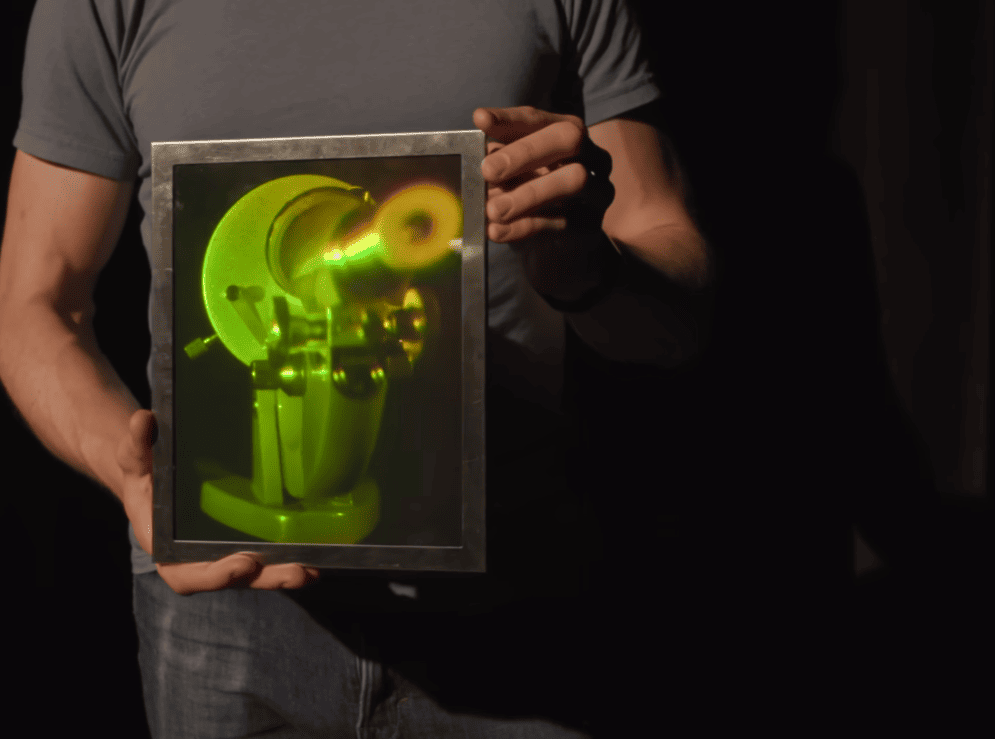
Seeing in 3D: Advancements in Holographic Display Technology
Holographic History in 2D and 3D
As mentioned before, the first hologram was invented in 1947. However, it wasn’t until the early 2000s that advancements in technology allowed for the development of true three-dimensional holographic displays. This is when researchers and engineers began working towards creating a display that would eliminate the need for special glasses or headsets to view 3D content.
One of the early pioneers in this field was Massachusetts Institute of Technology (MIT) researcher Stephen Benton, who developed a holographic video display system in 1989. This groundbreaking technology utilized a laser and mirrors to project a moving 3D image onto a screen.
Since then, the development of holographic displays has advanced significantly, with major contributions from companies such as Sony and Microsoft. Today, holographic displays are used in various industries, from entertainment and advertising to medical imaging and education.
Creating a Hologram: From Capture to Display
The process of creating a hologram begins with capturing the interference pattern between the reference and object beams. This can be done through various methods, including laser scanning, stereoscopic photography, or computer-generated imagery.
Once the interference pattern is recorded, it is then processed and translated into frames that can be projected by the hologram projector. These frames are carefully calibrated and synchronized to create the illusion of a three-dimensional object in motion.
As technology continues to advance, so does the process of creating holographic displays. Researchers are constantly exploring new methods and techniques, such as using multiple layers or combining holography with other technologies like augmented reality, to push the boundaries of what is possible with holographic displays.

The Challenge of Three Dimensions
While holographic displays have come a long way, there are still challenges to overcome in order to achieve true 3D representation. One of the biggest challenges is creating a full-color display, as many current holographic displays are limited to monochromatic or limited color ranges.
Another hurdle is the ability to create realistic images from all angles and perspectives. Currently, most holographic displays are optimized for viewing from a specific angle, making it difficult to fully experience the 3D effect from different vantage points.
Despite these challenges, holographic display technology continues to progress at an astonishing rate, bringing us closer to fully immersive and interactive three-dimensional experiences. Whether it’s for entertainment, education, or medical purposes, the potential applications of holographic displays are endless and exciting. So, the future of holographic display technology looks incredibly promising, and we can only imagine what advancements and breakthroughs await us in the years to come.
Holographic Projections & Displays: Beyond Entertainment
While holographic displays are often associated with entertainment and visual effects, their potential reaches far beyond these industries. In fact, holography has a wide range of practical applications that can greatly benefit society.
One such application is in the medical field, where holographic images can provide more accurate and detailed representations of body parts or organs for surgical planning. This technology can also aid in medical education and training, allowing students to view and interact with holographic representations of various medical scenarios.
Holographic displays can also be used for advertising and marketing, providing eye-catching and interactive visual experiences that can capture the attention of potential customers. In architecture and design, holograms have been utilized for virtual modeling and visualization, giving architects and designers a better understanding of their projects before they are built.
Additionally, holographic displays can be used in telepresence applications, allowing remote individuals to interact with each other as if they were in the same room. This has great potential for business meetings, education, and even family gatherings.
The Future of Holographic Display Technology
As technology continues to evolve at a rapid pace, so does the world of holograms. Researchers and developers are constantly pushing the boundaries of what is possible with holographic display technology.
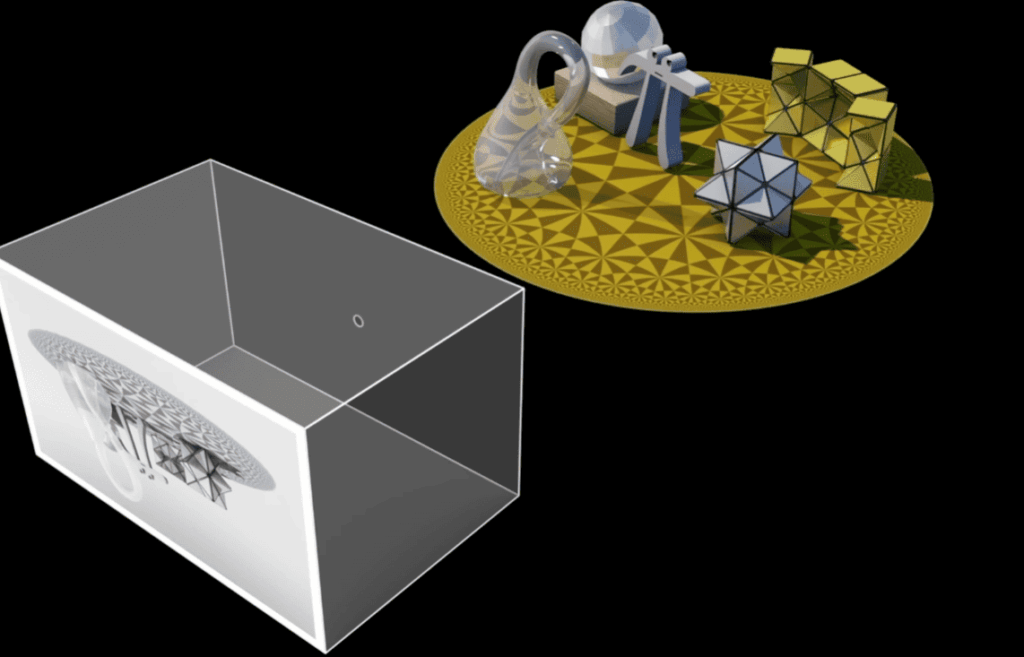
One area that has seen significant growth is the use of holographic displays in virtual and augmented reality experiences. This integration allows for even more immersive and interactive experiences, blurring the lines between the physical and digital worlds.
In addition, advancements in materials science have also contributed to the development of thinner, lighter, and more flexible holographic displays. This opens up new possibilities for applications such as wearables and portable devices.
With the potential to revolutionize industries and enhance our daily lives, there is no doubt that holographic display technology will continue to be at the forefront of innovation in the years to come.
The State of 3D Holograms Today
Today, holographic displays are more commonly found in specialized industries or events, but with the rapid pace of development and increasing demand for immersive experiences, it is only a matter of time before holograms become a part of our daily lives.
In fact, some companies have already started implementing holographic displays in retail stores and trade shows to provide customers with unique and interactive experiences. As technology continues to advance, holographic displays may become a common feature in our homes, workplaces, and public spaces.
With the potential to transform how we interact with digital content and each other, the future of holographic display technology is filled with endless possibilities. So, keep your eyes open for holograms – they just might be appearing in unexpected places sooner than you think!
Measuring Quality and Accuracy of Holographic Displays
As holographic display technology continues to evolve and improve, it is important to have methods in place to measure the quality and accuracy of these displays. This ensures that the final holographic images produced are as realistic and accurate as possible.
One common method used is called “subjective assessment,” which involves gathering a group of individuals, who are experts or users, to view the holographic image and rate its realism on a scale. Their assessments are based on their personal perception and judgment. This method provides valuable insights into the subjective experience of the holographic display.
Another method, known as “objective assessment,” employs advanced imaging techniques and algorithms to measure various aspects of the holographic image quantitatively. This includes analyzing parameters like resolution, contrast, color accuracy, and depth perception. By leveraging these objective measures, researchers and developers can assess and improve the technical performance of holographic displays.
As holographic displays become more commonplace, it becomes increasingly important for these assessment methods to continue evolving. This evolution ensures that the quality and accuracy of holographic images meet the high standards expected in various industries. With advancements in technology and ongoing research, we can expect to witness even more accurate, realistic, and immersive holographic displays in the future. These displays have the potential to revolutionize industries such as entertainment, education, healthcare, and design by offering unprecedented visual experiences.
So, the race to achieve true 3D representation through holographic displays continues, bringing us closer to fully immersive and interactive experiences that were once thought impossible. The potential applications for this technology are vast, and with ongoing development and innovation, we can only imagine what the future holds for holographic display technology.
FAQ
How does a 7D hologram projector work?
A 7D hologram projector is an advanced technology that uses a combination of lasers, precisely positioned mirrors, and specialized lenses to create a captivating three-dimensional image that appears to effortlessly float in mid-air. The intricate system also leverages sophisticated software algorithms to project multiple angles of the image simultaneously, resulting in a truly mesmerizing and immersive experience that transports viewers into a whole new realm of realism and wonder. With its intricate engineering and cutting-edge capabilities, the 7D hologram projector pushes the boundaries of visual display, offering a glimpse into the future of holographic technology.
Can holographic displays be used for gaming?
Yes, holographic displays have immense potential for gaming and are currently being extensively explored by developers. These cutting-edge displays offer a truly immersive experience, allowing players to interact with their games in unprecedented ways. Through the integration of advanced technologies, we can anticipate a future where holographic displays revolutionize the gaming industry, unlocking endless possibilities for gamers worldwide. The captivating visuals, coupled with enhanced interactivity, will transport players into a realm where imagination seamlessly blends with reality, creating unforgettable gaming experiences.
Are there any limitations to holographic display technology?
As with any developing technology, there are limitations to holographic display technology. These include the current high cost of production, which can limit its accessibility for everyday use. Additionally, the size and technical complexity of some holographic displays make them unsuitable for portable devices. However, ongoing research and advancements in materials science are addressing these challenges, bringing you closer to more affordable and versatile holographic displays. As the technology continues to evolve, we can expect these limitations to become less significant, paving the way for widespread adoption and integration in various industries.
How does CGI hologram work?
CGI (Computer Generated Imagery) holograms are created using a combination of computer graphics and holographic technology. This involves the creation of a digital 3D model, which is then projected onto a physical surface using lasers to create a realistic and seamless 3D image.
The process typically involves the use of advanced software tools and techniques to achieve high levels of detail, texture, and lighting. With the continual advancements in CGI technology, you can expect to see even more realistic and compelling holographic displays in various applications. Overall, CGI holograms offer an efficient and versatile method for creating stunning visual experiences that add a new dimension to our perception of reality.
What industries will benefit from holographic display technology?
Holographic display technology has immense potential to revolutionize numerous industries. Some of the most promising applications include entertainment, education, healthcare, and design. In the entertainment industry, holographic displays can bring live performances and events to life in a way that was previously unimaginable.
In education, students can benefit from interactive and immersive learning experiences using holographic displays. Healthcare professionals can use these displays for advanced medical imaging and simulations, while designers can utilize them for creating realistic 3D models and prototypes. With ongoing advancements in the technology, we can expect to see even more diverse applications of holographic displays in the future.
How does hologram light work?
Hologram light is created using lasers that project a 3D image or object onto a physical surface. This involves the use of two coherent beams of light, one acting as an illumination source and the other as a reference beam. The interference pattern created by these beams produces diffraction patterns that result in the projection of a holographic image.
The color and depth of the image are determined by the wavelengths of the lasers used. Through precise control of these lasers, hologram light can create stunningly realistic visual displays that appear to float in mid-air, offering viewers an unforgettable experience. As technology continues to advance, we can expect even more refined and sophisticated methods for creating holographic light displays with greater detail and accuracy.
How do printed holograms work?
Printed holograms are created using a multi-step process that involves the use of specialized equipment and materials. The first step is to create a master hologram, which is typically done using lasers and photoresist materials. This master hologram serves as a template for creating multiple copies of the original image. The next step is to coat the master hologram with a layer of silver or aluminum to create a reflective surface. This is followed by a process called embossing, where the master hologram is pressed onto a roll of plastic film, transferring the image onto it. The final step involves laminating and cutting the film into smaller pieces that can be attached to various products for authentication or aesthetic purposes.
Conclusion Paragraph
So, hologram projectors and displays offer an exciting glimpse into the future of technology and visual display. With ongoing advancements in materials, software, and hardware, you can expect to see even more impressive holographic displays in various applications. From gaming to education, healthcare to design, the possibilities for holographic technology are endless. So hold on tight as you embark on a journey towards an awe-inspiring new era of visual experiences. With holographic displays, the future is now.