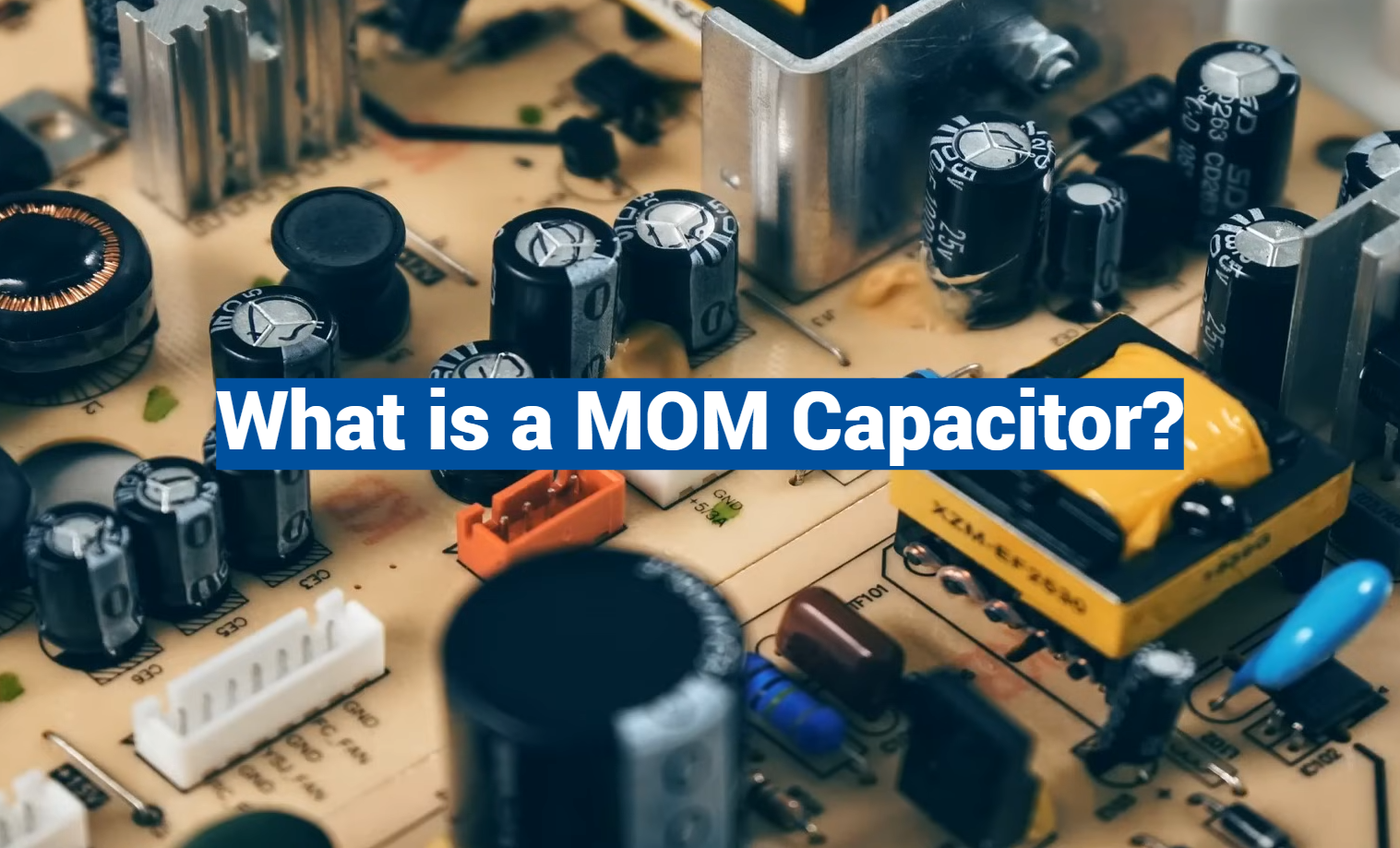
Enter the fascinating world of electrical components as we dive deep into the intriguing realm of MOM capacitors. If you’ve ever pondered over the question, “What is a MOM capacitor?” then prepare to have your curiosity satisfied. These unassuming but powerful devices are essential in modern electronics, revolutionizing their performance and reliability. Whether you’re a tech enthusiast or just curious about how the technological wonders around us function, hold on tight as this guide unlocks the secrets of MOM capacitors and unravels their incredible impact in the realm of electrical engineering.
What are MOM capacitors and how are they manufactured?
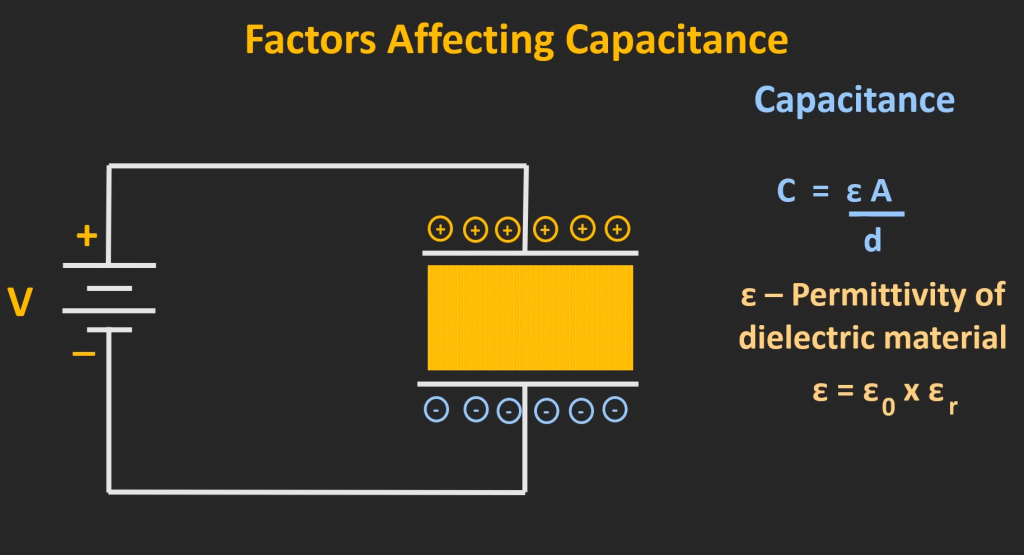
MOM capacitors are one of the most popular types of capacitors used in electronic circuits. They are typically made up of two metal plates separated by a dielectric material, which acts as an insulator between them. The dielectric material can be anything from paper to plastic, depending on what is necessary for the application. The plates are usually connected with a wire, and when electricity passes through the capacitor, it creates an electrostatic field that stores energy. This stored energy is released when the capacitor is discharged.
Another common manufacturing method involves coating the metal plates with a dielectric material, such as glass or ceramic. This process usually occurs in two steps: first, an adhesive layer is applied to the metal plates; second, the dielectric material is applied and sealed with a heat source. This method is often used for smaller capacitors, as it allows for greater precision.
Finally, MOM capacitors can also be manufactured using surface-mount technology (SMT). In this process, the metal plates are coated with a conductive ink that serves as an electrical connection between them. The capacitor is then soldered onto a printed circuit board. This method is often used for very small capacitors, as it provides the highest level of precision.
No matter which manufacturing technique is used, MOM capacitors are essential components in many electronic circuits and devices. They provide reliable performance across a range of frequencies and temperatures, making them ideal for use in demanding applications such as industrial automation, medical electronics, and aerospace systems. By using MOM capacitors in these applications, engineers can ensure that their designs will meet all of their performance requirements [1].
Main characteristics of a MOM capacitor
High capacitance density
MOM (Metal Oxide Metal) capacitors, renowned for their exceptional capacitance density, surpass other capacitor types such as electrolytic or ceramic capacitors. Due to their unique ability to store a significantly greater amount of energy within the same volume, MOM capacitors emerge as the perfect choice for applications where space constraints play a limiting role. This makes them an indispensable component in compact electronic devices, enabling efficient energy storage, enhanced performance, and optimal utilization of available space. With their advanced design and superior capabilities, MOM capacitors greatly contribute to the overall efficiency and reliability of electronic systems, ensuring seamless operation and improved user experience.
High-temperature stability
The metal-oxide-metal (MOM) construction of MOM capacitors makes them highly resistant to temperature variations and thermal shock. This is attributed to the robust nature of the dielectric material, which effectively isolates the capacitor from external heat sources, ensuring reliable performance even in challenging conditions. Additionally, their exceptional high-temperature stability enables them to withstand harsh environments, making them an ideal choice for critical applications such as power supplies or motor control systems, where reliability and durability are paramount.
Low parasitic capacitance
The use of metal-oxide layers in MOM (Metal-Oxide-Metal) capacitors brings about a significant reduction in parasitic capacitance, which refers to the unwanted capacitance that exists between different elements of a circuit. This reduction in parasitic capacitance makes MOM capacitors particularly suitable for high-frequency signal applications, where precise control over capacitor behavior is crucial for optimal circuit performance.
In these high-frequency applications, uncontrolled capacitor behavior can lead to undesired effects such as signal degradation, attenuation, or distortion. By minimizing the risk of interference, MOM capacitors ensure that signals remain unaffected by external noise sources and reach their intended destination with minimal distortion or loss. This enhanced performance and reliability make MOM capacitors a preferred choice in critical circuit designs where signal integrity is of utmost importance.
Symmetric plate design
MOM (Metal-Oxide-Metal) capacitors, known for their exceptional stability and reliable performance, feature symmetric plate designs that contribute to their impressive characteristics. The plates are meticulously crafted to achieve uniform electric fields across the dielectric layer, facilitating efficient charge transfer and effectively mitigating any potential power loss. This outstanding attribute ensures a consistent and uninterrupted flow of current in the circuit, making MOM capacitors the top choice for energy-intensive applications that demand utmost reliability and efficiency.
Superior RF characteristics
In addition to their exceptional capacitance density and low parasitic capacitance, MOM (Metal-Oxide-Metal) capacitors boast impressive RF characteristics. With their unique design and construction, MOM capacitors offer superior performance in radio frequency (RF) applications, making them the ideal choice for a wide range of uses including antennas, amplifiers, and signal conditioning circuits.
One of the key advantages of MOM capacitors is their ability to provide consistent impedance levels across a wide range of frequencies. This ensures that signals remain strong and stable throughout the entire transmission process, resulting in reliable and high-quality communication. Whether it’s for wireless communication, satellite systems, or other RF applications, MOM capacitors deliver exceptional performance, helping to optimize the efficiency and effectiveness of these systems.
Moreover, the advanced design of MOM capacitors allows for precise tuning and customization, making them highly versatile and adaptable to specific RF requirements. This level of flexibility enables engineers and designers to fine-tune the performance of RF circuits, achieving optimal results for various applications.
In summary, MOM capacitors offer a combination of superior capacitance density, low parasitic capacitance, and outstanding RF characteristics. Their ability to maintain consistent impedance levels and provide reliable signal transmission makes them an indispensable component in radio frequency applications, ensuring optimal performance and efficiency.
Good matching characteristics
MOM capacitors, also known as Metal-Oxide-Metal capacitors, are highly versatile components that offer exceptional matching characteristics, making them a perfect choice for precision applications. Their symmetric plate designs enable them to maintain a consistent impedance at various operating frequencies, ensuring reliable and accurate signal transmission. These capacitors exhibit remarkable stability, allowing signals to remain strong and distortion-free throughout the entire frequency range. This outstanding performance makes MOM capacitors invaluable in critical applications where precision and reliability are paramount. Whether it’s in telecommunications, medical equipment, or high-end audio systems, MOM capacitors deliver exceptional performance and contribute to the overall success of the system.
Long service life
MOM capacitors, also known as metal-oxide-metal capacitors, are widely recognized for their exceptional durability and long service life. This is primarily attributed to the robust nature of the dielectric material used in their construction, which offers superior protection against various environmental factors, including moisture, dust, and contaminants. The high-quality dielectric composition ensures that these components can withstand extreme temperatures and harsh conditions, making them an ideal choice for demanding applications in even the most hostile environments. With their extended lifespan and reliable performance, MOM capacitors have become a go-to solution for industries that require reliable and long-lasting electronic components.
Excellent cost-effectiveness
MOM (Metal Oxide Metal) capacitors offer exceptional value for money, making them an ideal choice for manufacturers looking to maintain low costs without compromising performance. Not only do they deliver superior energy efficiency, consuming less power compared to other capacitor types, but they also contribute to reducing overall operating expenses. With their reliable and affordable nature, MOM capacitors are perfectly suited for cost-sensitive applications where reliability, affordability, and long-term performance are paramount. Their ability to balance cost-effectiveness with high-performance capabilities makes them an excellent investment for manufacturers seeking optimal results in their products [2].
Application examples of MOM capacitors
MOM capacitors have a wide range of applications. Among them are:
- Automotive electronics– MOM capacitors provide power filtering for automotive audio systems, vehicle navigation systems, and engine control systems.
- Industrial electronics– MOM capacitors are used in industrial electronic equipment such as frequency inverters, uninterruptible power supplies (UPSs), and welding machines.
- Home appliances– MOM capacitors are used in home appliances such as vacuum cleaners, washing machines, dishwashers, and air conditioners.
- Lighting systems– MOM capacitors provide power filtering for fluorescent lighting systems.
- LCDs– MOM capacitors provide power filtering for LCD TVs and monitors.
- Communications – MOM capacitors are used in communications equipment such as modems, routers, and cellular phones.
- Computers– MOM capacitors provide power filtering for desktop and laptop computers.
- Other applications – MOM capacitors are also used in toys, medical equipment, and military equipment.
MOM capacitors are extremely versatile components that can be used in a variety of different applications due to their ability to provide power filtering and other benefits. They are typically smaller in size than traditional capacitors, making them ideal for applications where space is at a premium. Additionally, MOM capacitors have very low failure rates which makes them well-suited for critical applications such as medical or military equipment. As technology continues to advance, the demand for these versatile components will only increase.
FAQ
What are the advantages of a MOM capacitor?
A MOM capacitor offers several advantages over other types of capacitors. It has a high capacitance value, which allows it to store more energy than other types of capacitors. Additionally, MOM capacitors are designed for long-term reliability and durability, making them ideal for applications that require prolonged performance and operation in harsh conditions. Finally, MOM capacitors are known for their low impedance characteristics, which makes them suitable for high-frequency applications. As a result, MOM capacitors are often used in power supplies, audio systems, and other electronic devices that require high-performance capacitance.
What are MIM capacitors used for?
MIM capacitors are used in a variety of applications, including audio systems, power supplies, and other electronic devices that require high performance. MIM capacitors are designed to provide superior frequency response and voltage handling capabilities. Additionally, they offer low impedance characteristics which make them suitable for high-power circuits. Finally, MIM capacitors can also be used in analog circuitry for signal filtering and noise reduction. This makes them a great choice for audio systems that require superior sound quality.
What are the differences between MOM and MIM capacitors?
The primary difference between MOM and MIM capacitors is their design. MOM capacitors are designed with an all-solid structure, while MIM capacitors have a construction that uses metal plates and a dielectric material. MOM capacitors are known for their high capacitance values, while MIM capacitors offer superior frequency response and voltage handling capabilities. Additionally, MOM capacitors have low impedance characteristics while MIM capacitors offer superior noise reduction in analog circuits.
What is the difference between electrolytic and non-electrolytic capacitors?
The primary difference between electrolytic and non-electrolytic capacitors is the type of dielectric material used. Electrolytic capacitors use an electrolyte solution to form a barrier between two plates, while non-electrolytic capacitors rely on solid dielectrics such as ceramics or plastics. Additionally, electrolytic capacitors have a much higher capacitance value than non-electrolytic capacitors, making them ideal for applications that require high performance. However, electrolytic capacitors also tend to be more prone to failure due to their construction. Non-electrolytic capacitors are less prone to failure and are often used in circuits where reliability is paramount.
What are ceramic capacitors used for?
Ceramic capacitors are often used in a variety of applications, including audio systems, power supplies, and other electronic devices that require high performance. Ceramic capacitors offer low impedance characteristics which make them suitable for high-frequency circuits, and they also tend to be more resistant to temperature fluctuations than other types of capacitors. Additionally, ceramic capacitors are often used in analog circuitry for signal filtering and noise reduction. This makes them a great choice for audio systems that require superior sound quality. Finally, ceramic capacitors can also be used in power circuits for motor control and voltage regulation.
What is the difference between axial and radial leaded capacitors?
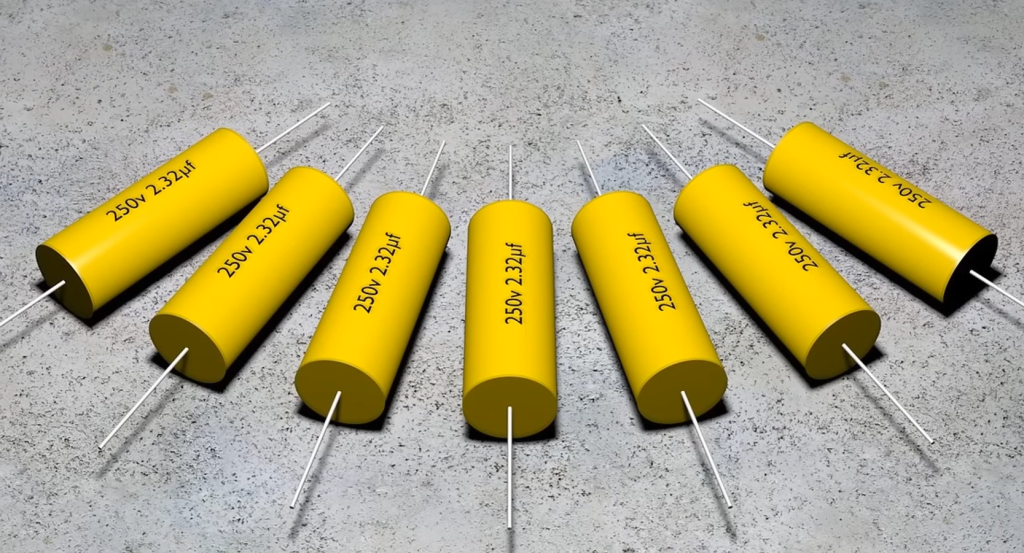
The primary difference between axial and radial leaded capacitors is the shape of their leads or pins. Axial leaded capacitors have two straight pins that extend outward from the capacitor body, while radial leaded capacitors have curved pins that are bent downward towards the center of the capacitor. Additionally, axial leaded capacitors tend to be more compact and can be easier to install in tight spaces. Radial leaded capacitors, on the other hand, are typically larger and have better heat dissipation characteristics than axial leaded capacitors. Both types of leaded capacitors can be used in a variety of applications, including audio systems, power supplies, and other electronic devices that require high performance.
Are there any special considerations for using polyester capacitors?
Yes, when using polyester capacitors, it is important to keep a few things in mind. Polyester capacitors are known for their high stability and reliability, but they can also be prone to vibration and temperature fluctuations. Additionally, it is important to select the correct voltage rating for the application – choosing a capacitor that is too low or too high could result in damage to the circuit. Finally, it is important to note that polyester capacitors tend to have relatively poor frequency response characteristics and can be susceptible to noise. Therefore, they should not be used in applications that require high-frequency performance.
What are the advantages of using tantalum capacitors?
Tantalum capacitors offer several advantages over other types of capacitors. They have a high capacitance value, which allows them to store more energy than other types of capacitors. Additionally, they are known for their low equivalent series resistance (ESR) and effective heat dissipation, making them ideal for applications that require prolonged performance and operation in harsh conditions. Finally, tantalum capacitors have very low leakage currents and can be used in power circuits for voltage regulation. Overall, these features make tantalum capacitors a great choice for applications that require high performance.
What is the difference between mim and mom capacitors?
The primary difference between MIM and MOM capacitors is the type of dielectric material used. MIM capacitors use a metal-insulator-metal (MIM) dielectric, while MOM capacitors use an all-solid structure. Additionally, MIM capacitors are known for their superior frequency response and voltage handling capabilities, while MOM capacitors offer higher capacitance values. Finally, MIM capacitors have low impedance characteristics which make them ideal for high-power circuits, while MOM capacitors are more suitable for analog circuitry and audio systems that require superior sound quality.
Conclusion Paragraph
So, MOM capacitors offer several advantages over other types of capacitors, including higher operating voltage and lower ESR. However, they are also prone to certain risks that must be taken into account when incorporating them into an electrical circuit. Careful consideration should be given to the selection of any capacitor so that it meets the specific needs of its application while minimizing potential risks. Additionally, good design practices must be followed to ensure that MOM capacitors are safely and reliably deployed. With the right approach, these components can bring significant benefits to any circuit.
Useful Video: On-Chip Capacitors (MiM, MoM, PiP, Mos Varactor)
References:
- https://patents.google.com/patent/WO2014137589A1/en
- https://www.utmel.com/blog/categories/capacitors/what-is-the-difference-between-mom-mim-and-mos-capacitors